Fluted panel manufacturer in Delhi
Flutes cut to your pitch and profile rather than bought in stock lengths — in MDF for interiors, waterproof WPC for wet and exterior positions, and tambour on a flexible backing where the panel has to follow a curve.
Projects
Fluted and tambour work
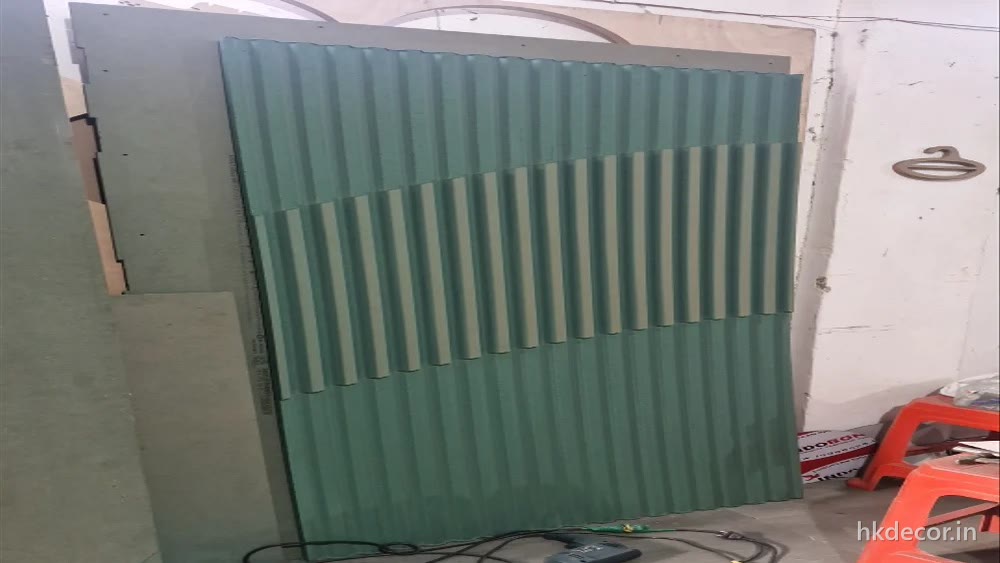
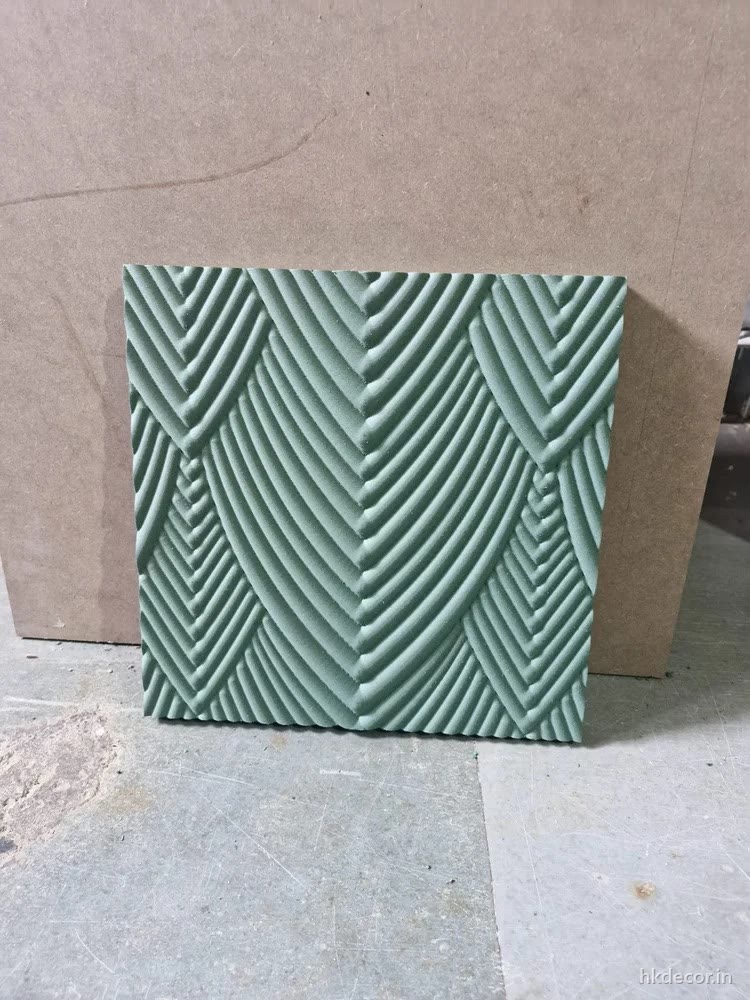
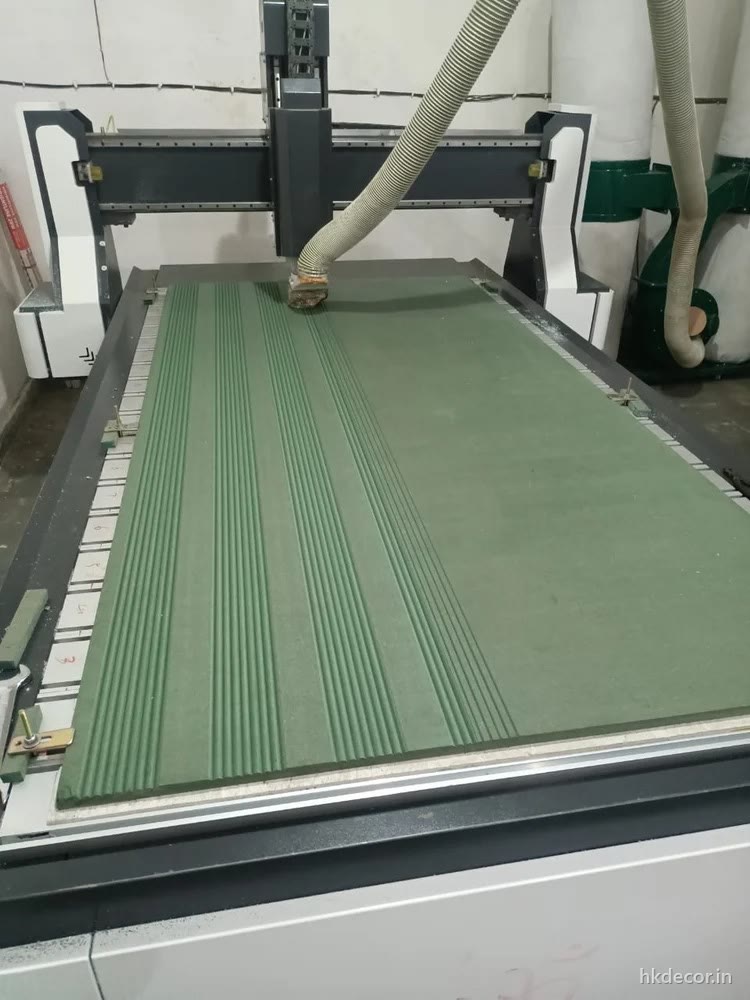
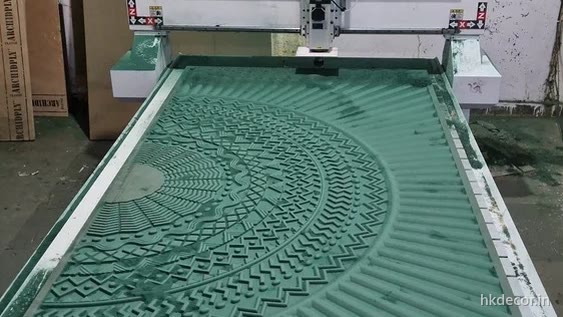
Cut flutes in raw board and primed, chevron and radial layouts, and a full sheet being grooved on the router. All photographed at the Bijwasan unit.
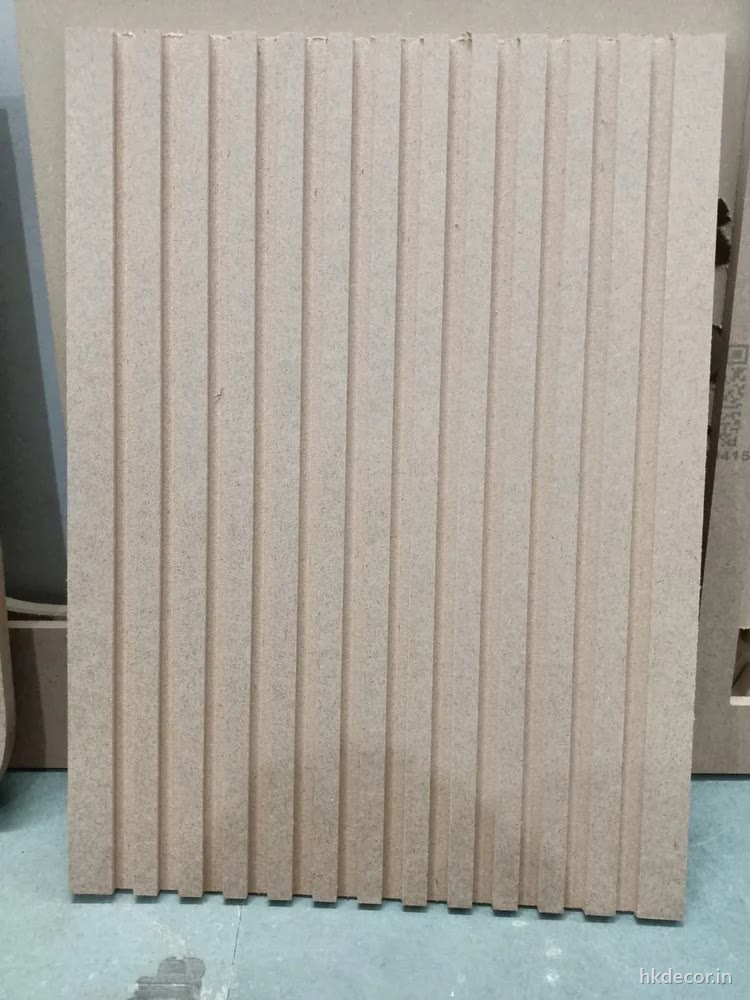
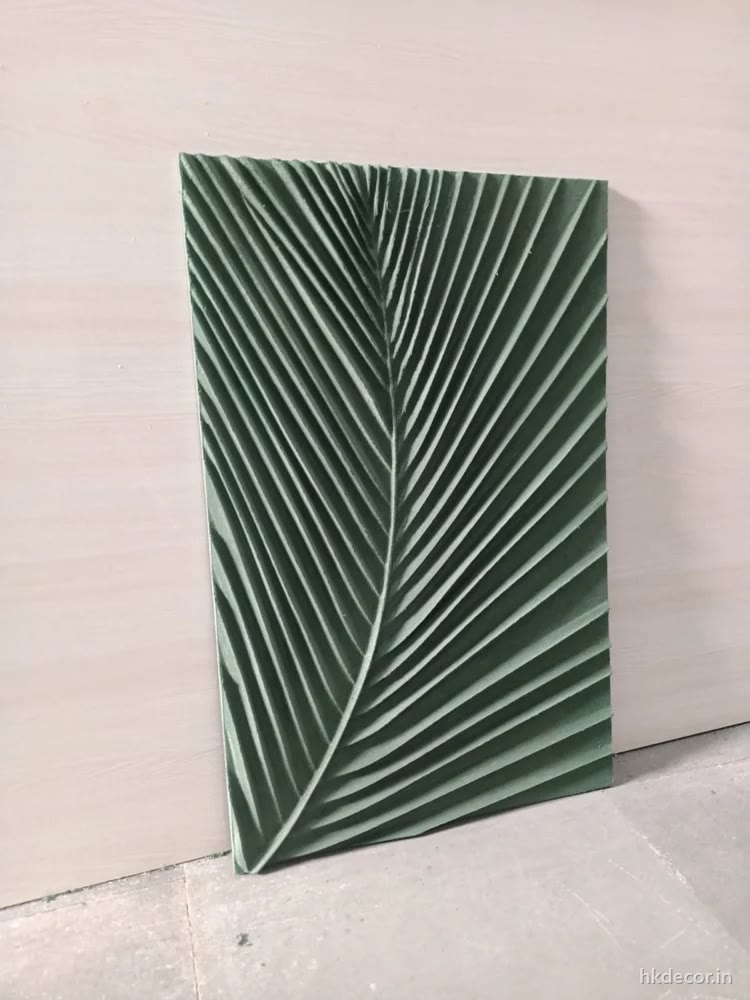
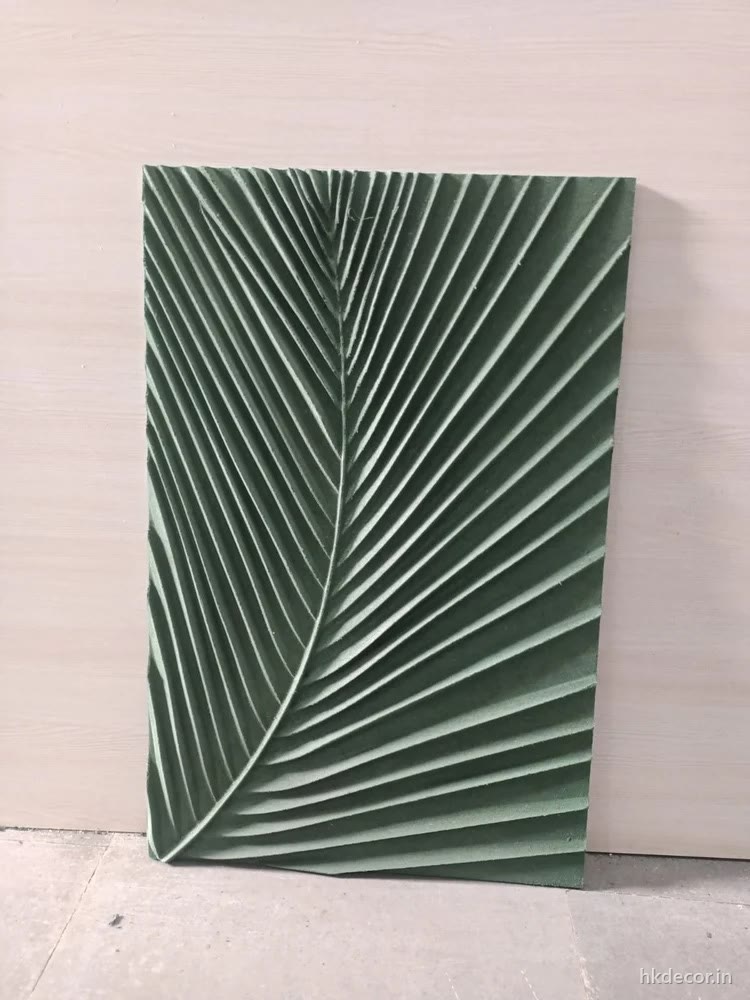
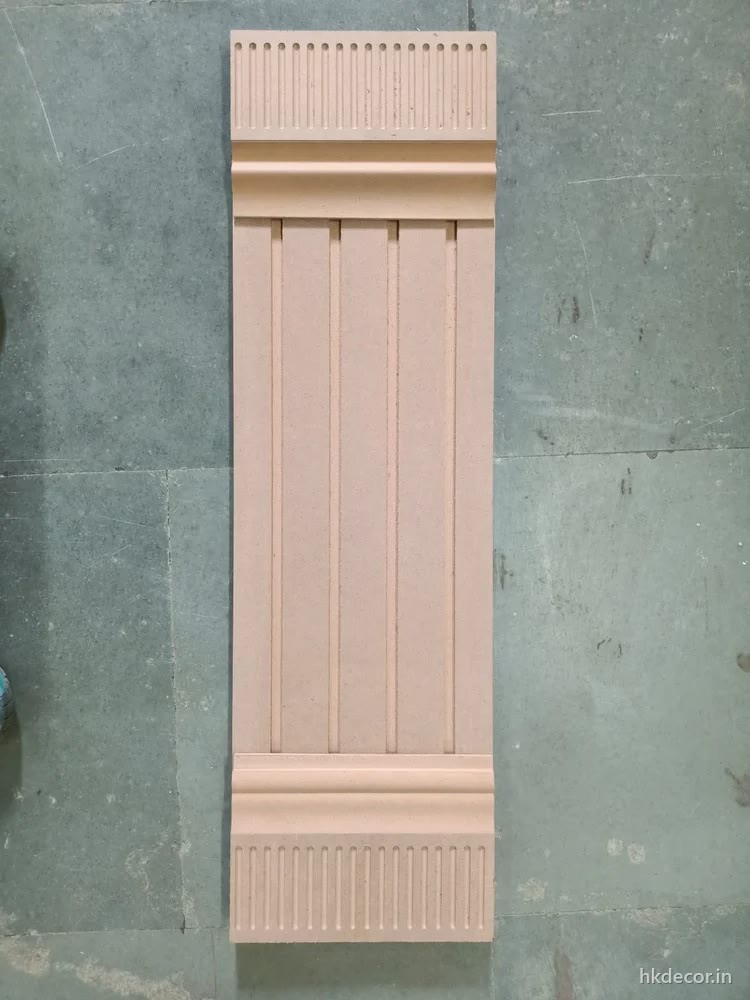
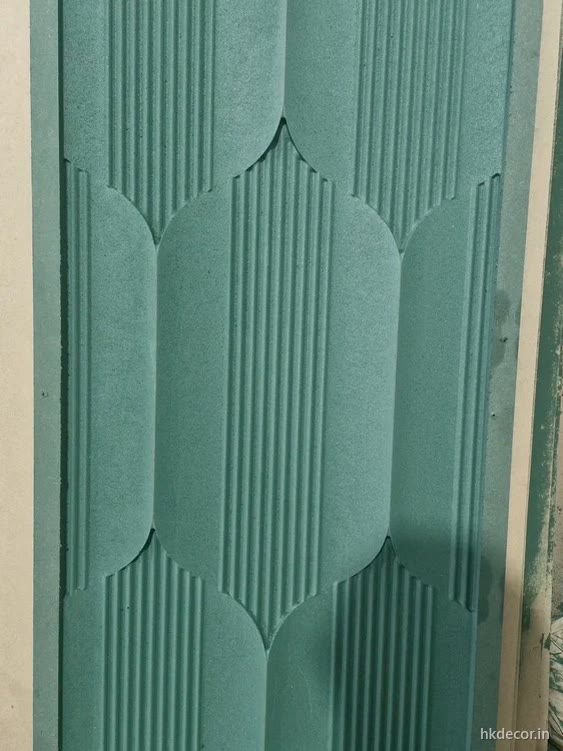
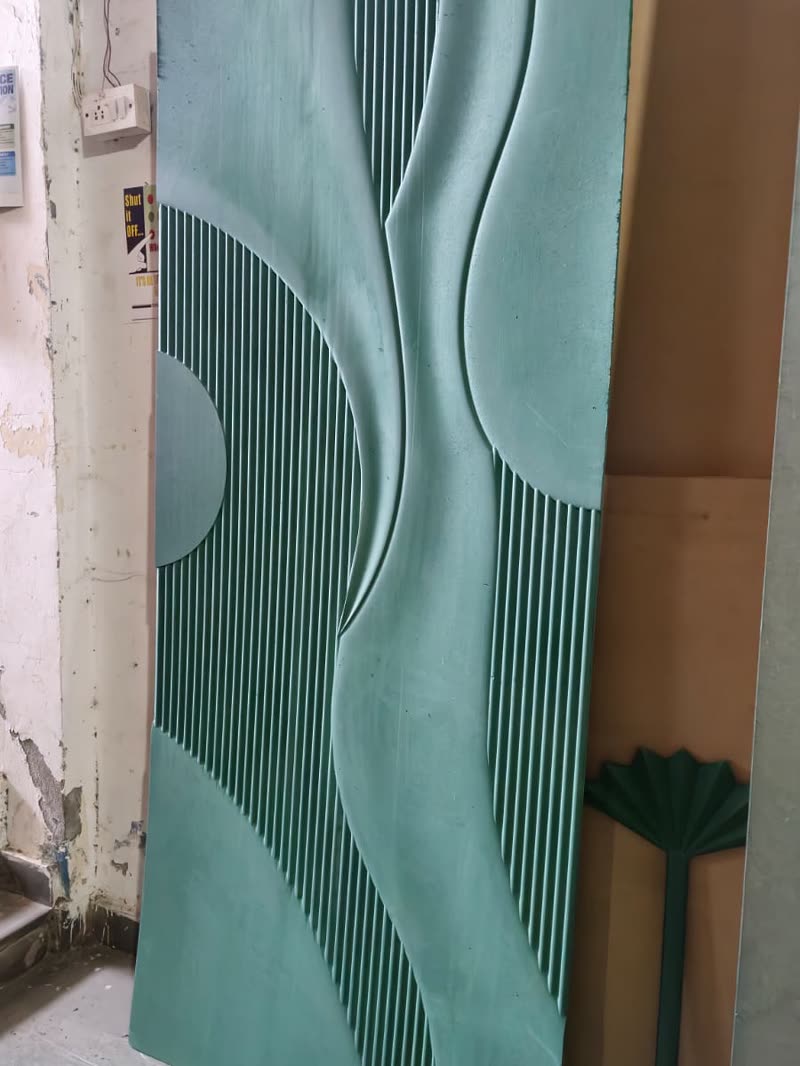
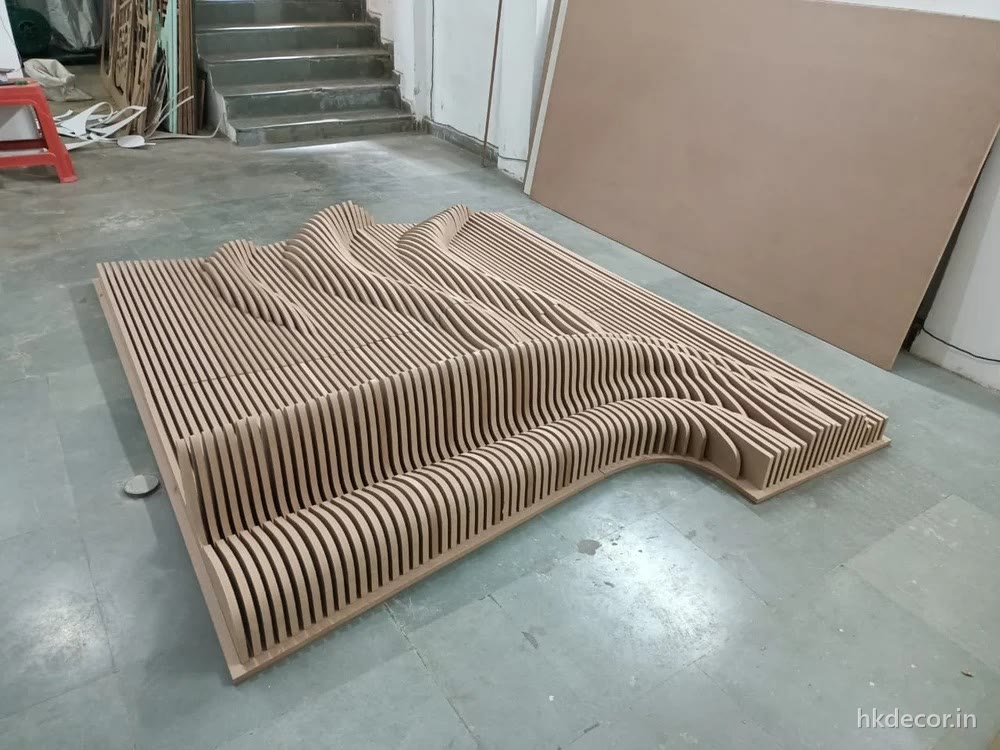
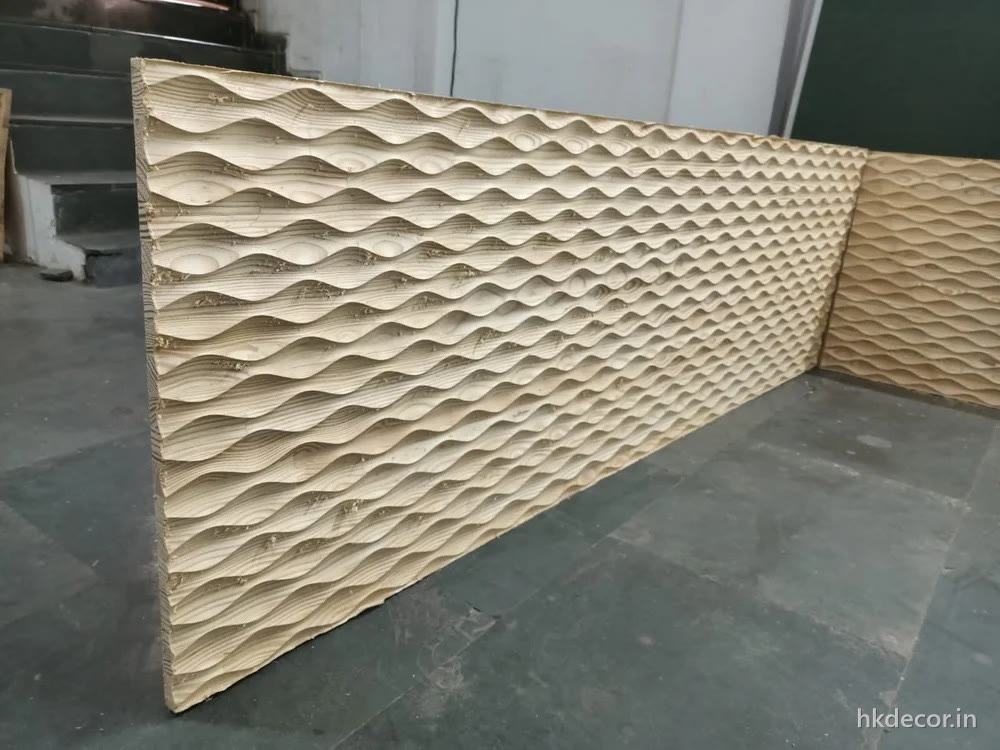
Fluting often runs alongside a carved feature — see how the two combine on parametric wall panels.
What this is
What a fluted panel manufacturer in Delhi does that a stock supplier cannot
Most fluted panels sold in Delhi arrive as a fixed product: 2400mm long, one pitch, one profile, laminated in whatever the supplier had. That works until the wall is 2650mm tall, or the flute has to die into a skirting, or the client wants the ribs to get wider as they cross a reception desk. Then you are cutting a finished product on site and the edge shows.
We cut the flutes instead. As a fluted panel manufacturer working from a single unit in Delhi, every run starts as a plain sheet on a router bed, so the pitch, the depth, the profile and the panel length are all yours to specify. A 2650mm wall gets 2650mm panels. A flute that has to taper, tapers. Half-round, V-groove, square rib, or a profile you send us as a section — the bit changes, the file changes, the price does not move much.
The three things below cover almost every fluted enquiry we get. They behave differently enough on site that specifying the wrong one is expensive, so they are separated rather than lumped together as "fluted".
Three things people mean by fluted
Fluted MDF panels for interiors
The default, and the right answer for a TV unit, a headboard wall, a corridor or a reception backdrop that stays dry.
We cut into 18mm or 25mm MDF and leave a solid back, so the panel arrives as one rigid piece rather than slats glued to a board. That matters at the ends: a solid-back fluted panel can be trimmed on site without anything coming loose, and it can be screwed through the trough of a flute where the fixing disappears. Pitch typically runs 25mm to 60mm centre to centre, with the groove taken 6mm to 12mm deep. Below about a 20mm pitch in 18mm board the webs get thin enough to chip when they are handled, so we will push back on a drawing that asks for it.
MDF takes primer and PU better than any other board we cut, which is the real reason it dominates interior fluting — a painted flute lives or dies on how sharp the shoulder of the groove stays under three coats. Where the panel is being veneered instead, we cut the flute after the veneer is laid so the finish wraps the profile rather than stopping at it.
WPC fluted louvers for wet and exterior areas
Waterproof WPC is what goes on a balcony, a facade, a bathroom wall, a planter face or anywhere a monsoon reaches.
It is a different material to work: softer under the cutter, so the edge is never as crisp as MDF, but it also never chips, and it does not care about standing water. We hold the pitch a little coarser — around 30mm and up — because a fine web in WPC will flex. Fluted WPC louvers are usually specified as a rain screen over a batten frame with an air gap behind, and we cut the panel and the fixing slots to the same file so the site team is not drilling into a finished face.
WPC takes laminate, lacquer and foil directly. Paint needs the correct key coat first — this is the single most common site failure we see with WPC, and it is why we ask what the finish is before quoting rather than after. If the panel is going outdoors and someone has specified MDF, we will not quote it. It will swell, and no primer prevents that.
Tambour panels that follow a curve
Tambour is the one that is genuinely different: individual slats bonded to a flexible backing so the panel bends.
It is what you want on a curved reception desk, a column, a bar front or a rounded bulkhead — anywhere a rigid fluted board would have to be faceted into segments and would show every joint. We cut the slats on the router, machine the back relief that lets them roll, and bond them to fabric or a flexible ply backing. The tightest radius depends on slat width: a 20mm slat will take a much tighter curve than a 45mm one, and we will tell you the minimum radius for your profile before you commit to it.
Tambour on a flat wall is also a legitimate choice — it reads slightly softer than a cut-in flute because each slat is a separate piece with a real shadow line between. The trade-off is that a tambour panel cannot be trimmed at the end of a run without exposing the backing, so setting out has to happen at drawing stage.
Comparison
Fluted MDF, fluted WPC or tambour
Same look from three metres away, three completely different specifications.
Fluted MDF
Fluted WPC
Tambour
Still choosing between boards? The HDHMR vs MDF guide covers all four, and CNC routing vs laser cutting explains why fluting is always a router job.
Still unsure?
Fluted datasheet · rev 08.2026
Fluted panel specifications
- Beds
- 3 × 3-axis routers, 8ft × 4ft
1 × 3-axis router, 10ft × 5ft - Tooling
- Half-round, V-groove and square-rib cutters
- Max panel length
- 3050mm in one piece · longer walls are butt-jointed at a flute
- Board
- 18mm and 25mm MDF · 12mm and 18mm WPC · HDHMR on request
- Pitch
- 25–60mm in MDF · 30mm and up in WPC
- Groove depth
- 6–12mm; deeper on request in 25mm board
- Profiles
- Half-round, V-groove, square rib, tapered, or your section
- Tolerance
- ±0.3mm across the bed
- Tambour slats
- 20–45mm wide on fabric or flexible ply backing
- Fixing
- Concealed through the trough, or on a batten frame
- Setting out
- Flute layout drawn to your wall before cutting, for approval
- Sample
- A cut sample in your board and finish on runs over 100 sq ft
- Turnaround
- 7–10 working days · 3–4 days express
- Installation
- Across Delhi NCR · pan-India dispatch
FAQ
Fluted and tambour questions
Can you match a fluted profile I have already used elsewhere?
Usually, yes. Send a photograph with a scale in it, or better, a 100mm offcut. We measure the pitch and the groove section and cut a sample in your board before the run. Where the original was a moulded product rather than a cut one we will say how close we can get — a moulded profile sometimes has an undercut that a router bit physically cannot reach.
What pitch should I specify for a fluted TV unit or feature wall?
25–35mm reads fine and detailed at close range, which suits a TV unit or a headboard you sit next to. 45–60mm reads better across a room and costs less to cut because there are fewer passes. Depth of 8–10mm gives a shadow line that holds up under downlights; anything shallower washes out.
What is the tightest curve a tambour panel will take?
It depends on slat width and backing. A 20mm slat on fabric backing will go round a tight column; a 45mm slat needs a much gentler radius. Give us the radius on the drawing and we will tell you the widest slat that works, rather than you specifying a slat and finding out on site.
Are the panels solid, or slats stuck onto a board?
Fluted MDF and fluted WPC are cut into a solid board with the back left intact, so the panel is one rigid piece and can be trimmed or drilled on site. Tambour is genuinely separate slats on a flexible backing, because that is the only way it can bend. We never sell a slat-on-board build as a solid fluted panel.
Can fluted panels go behind a shower or on a balcony?
In WPC, yes — that is exactly what it is for, including full exterior positions with a ventilated gap behind. In MDF, no, and we will not quote it. If the drawing says MDF for a wet area we will come back and ask before pricing it.
How do you handle the last panel in a run?
We set the flute layout out against your wall dimension at drawing stage so the run ends on a full flute rather than a sliver, and shift the pitch by a millimetre or two across the wall if that is what it takes. On a fluted board the end panel can also be cut down on site. Tambour cannot, which is why its setting out is fixed before cutting.
Other services
We also cut
Contact
Send the drawing. We reply today.
Email us [email protected] · attach DXF, PDF or a photo- Workshop
- Bijwasan, New Delhi
- [email protected]
- Hours
- Mon–Sun, 9:00am – 7:30pm
- Serving
- Delhi · Gurugram · Noida · Faridabad · Ghaziabad · pan-India dispatch
Prefer a form? It reaches the same team.