CNC jaali cutting in Delhi
Perforated jaali screens, room dividers and partitions cut to the actual opening in MDF, HDHMR and waterproof WPC — with the frame, the fixing detail and the hardware cut-outs on the same file.
Projects
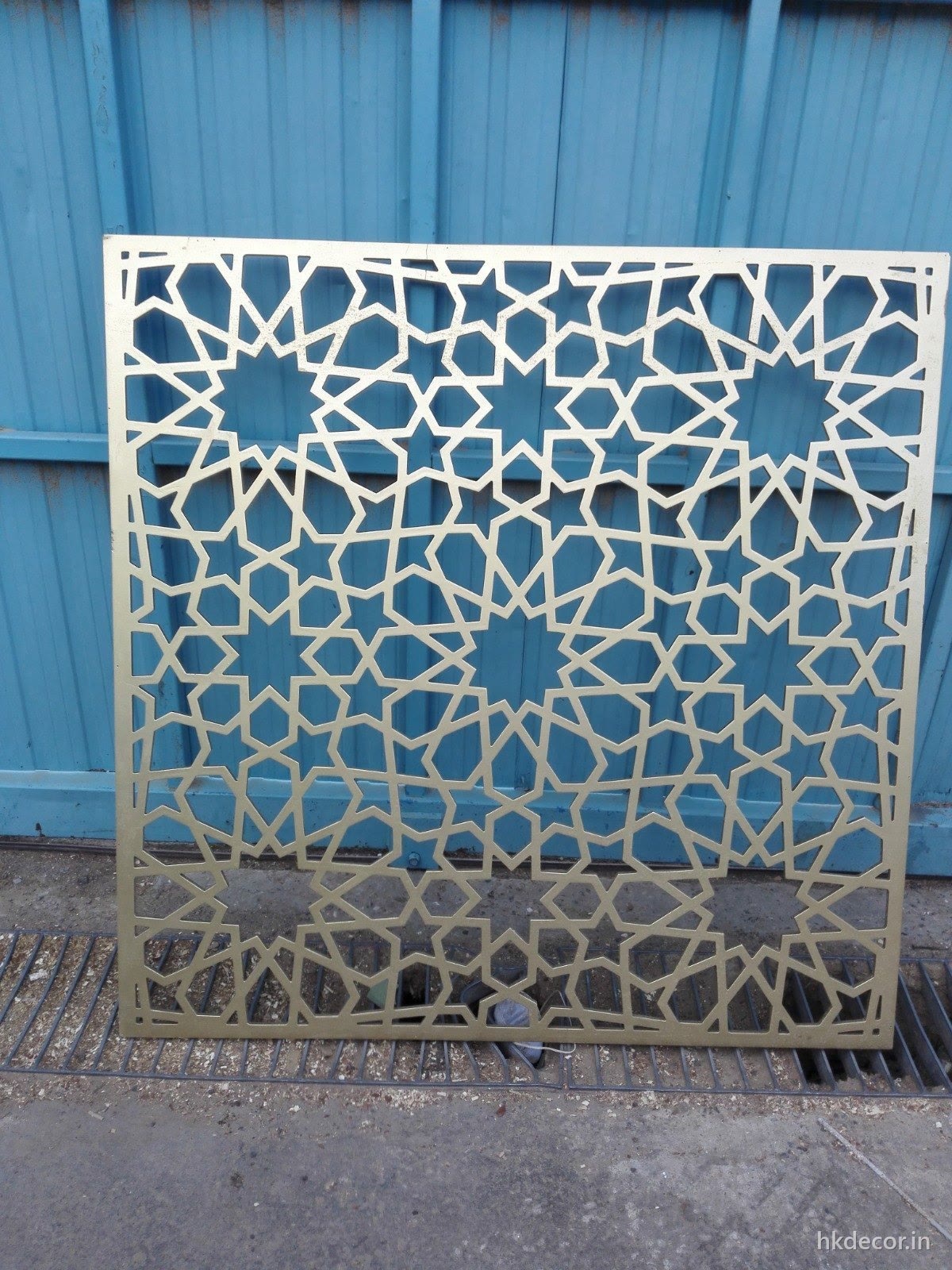
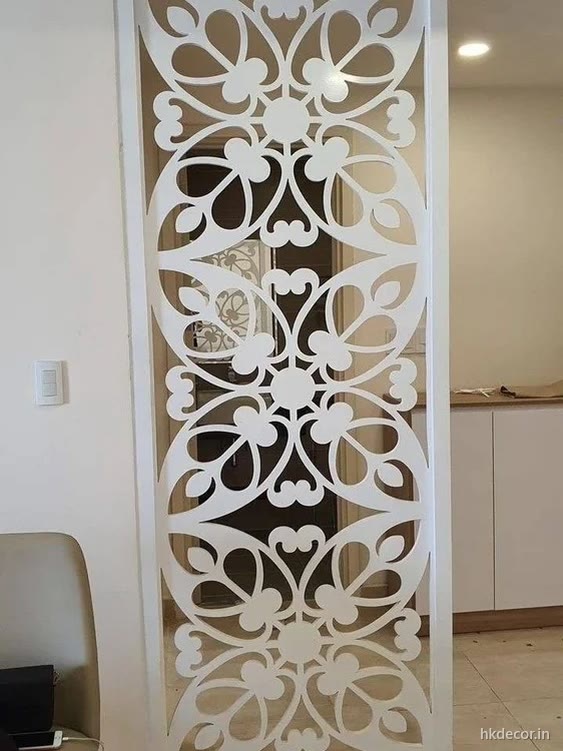
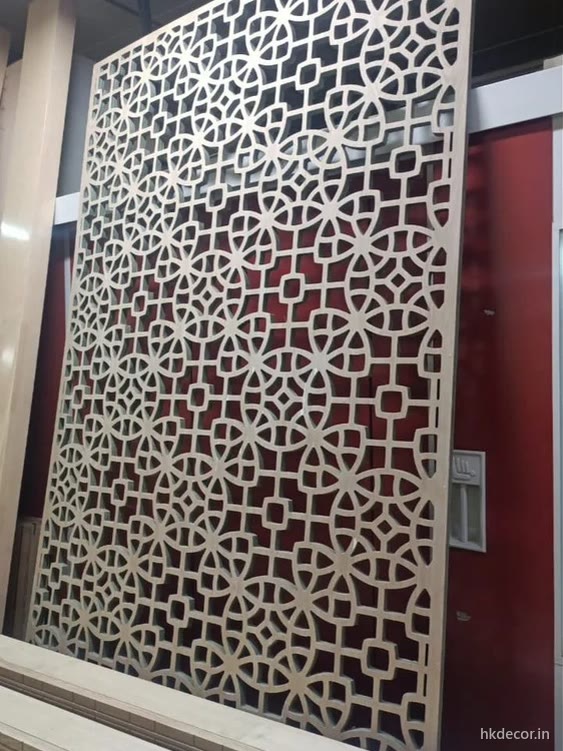
Jaali, mandala and screen work
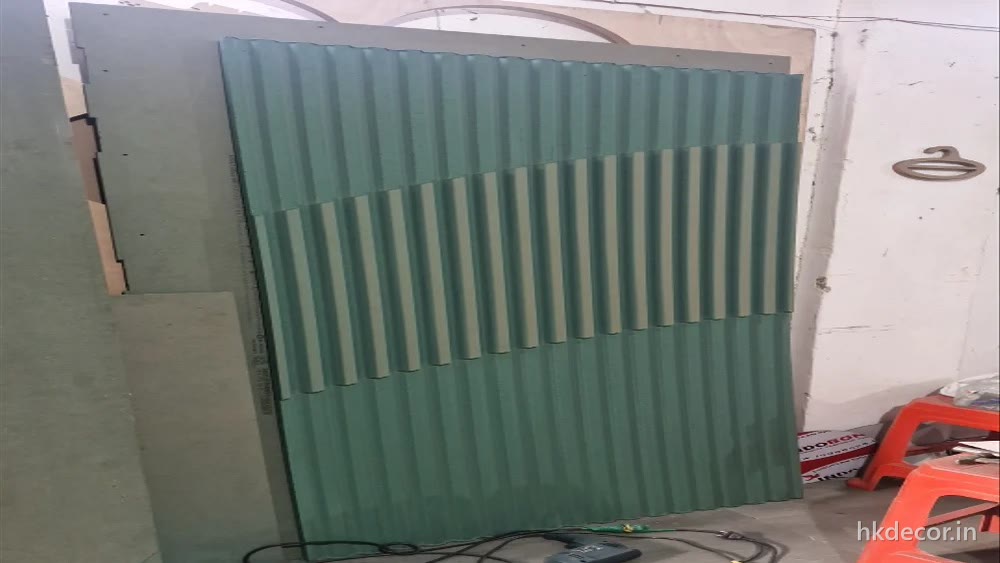
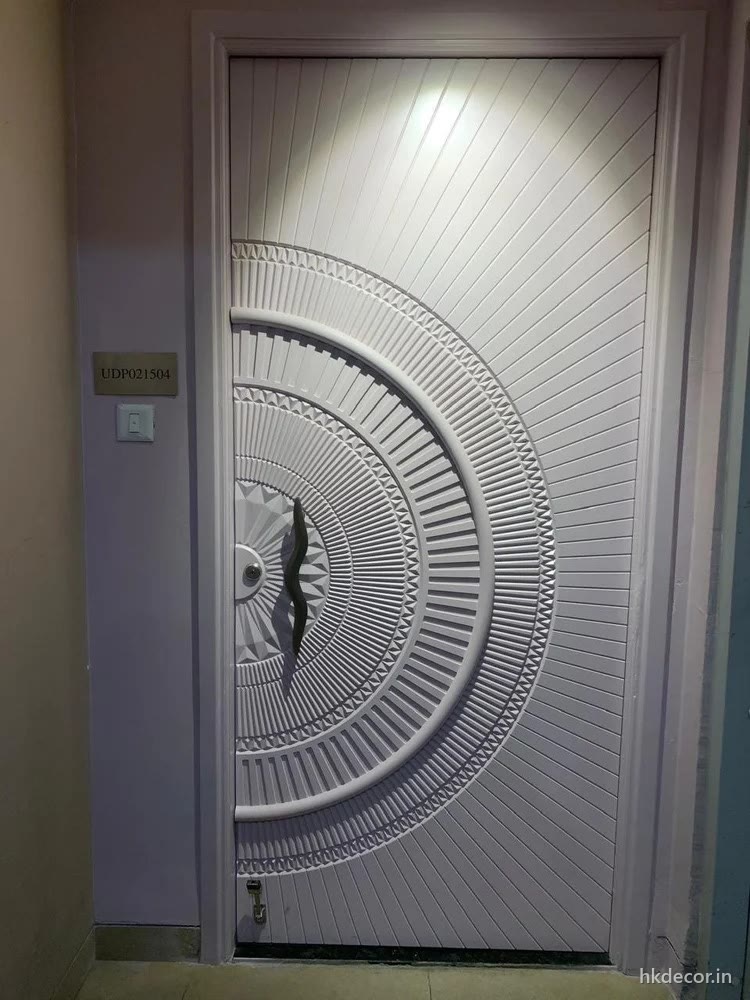
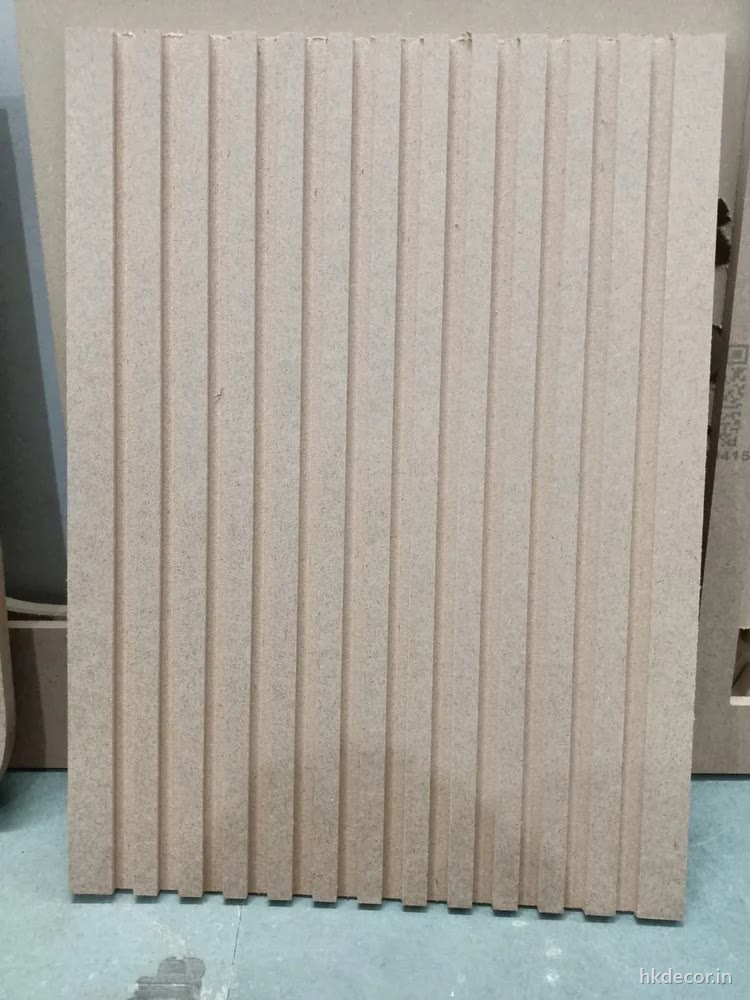
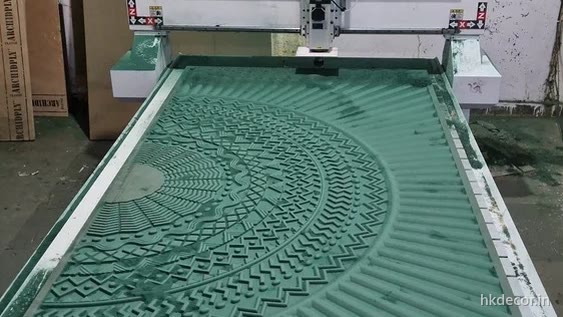
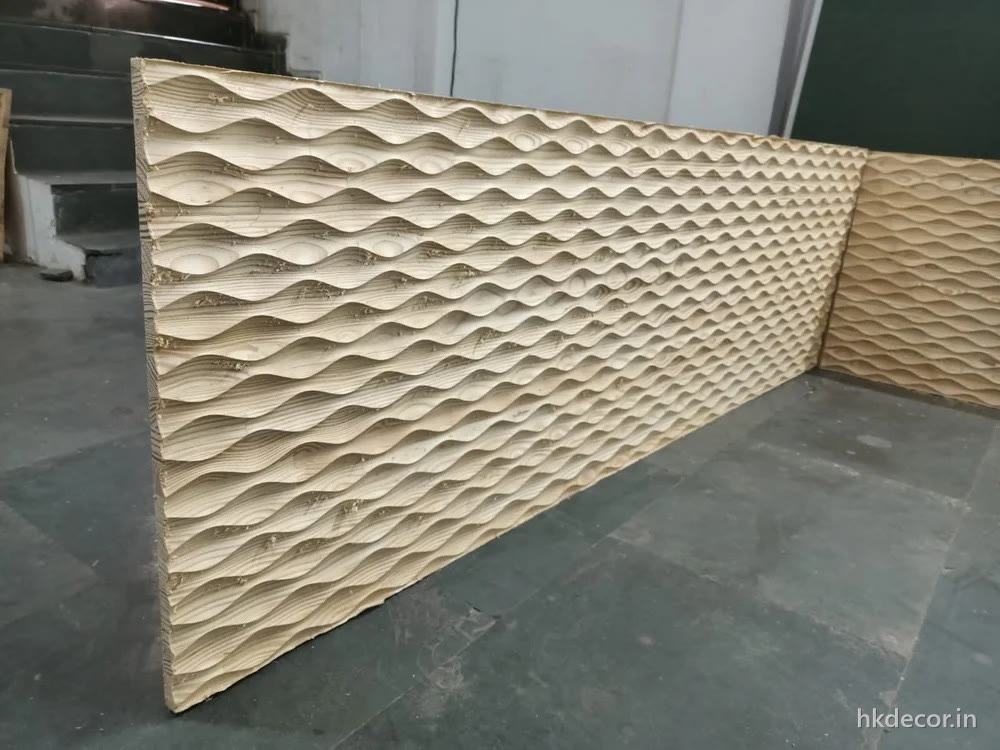
Perforated screens fitted in place, and mandala panels that are carved rather than cut through — the pattern taken to depth in a solid board. Tap any panel to see it larger.
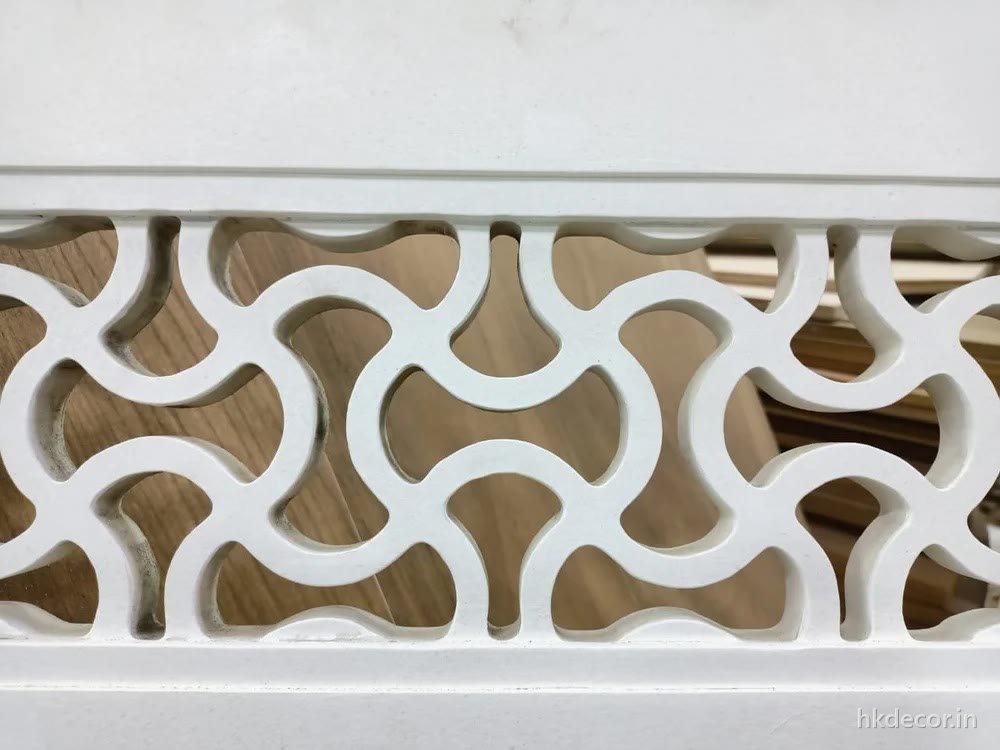
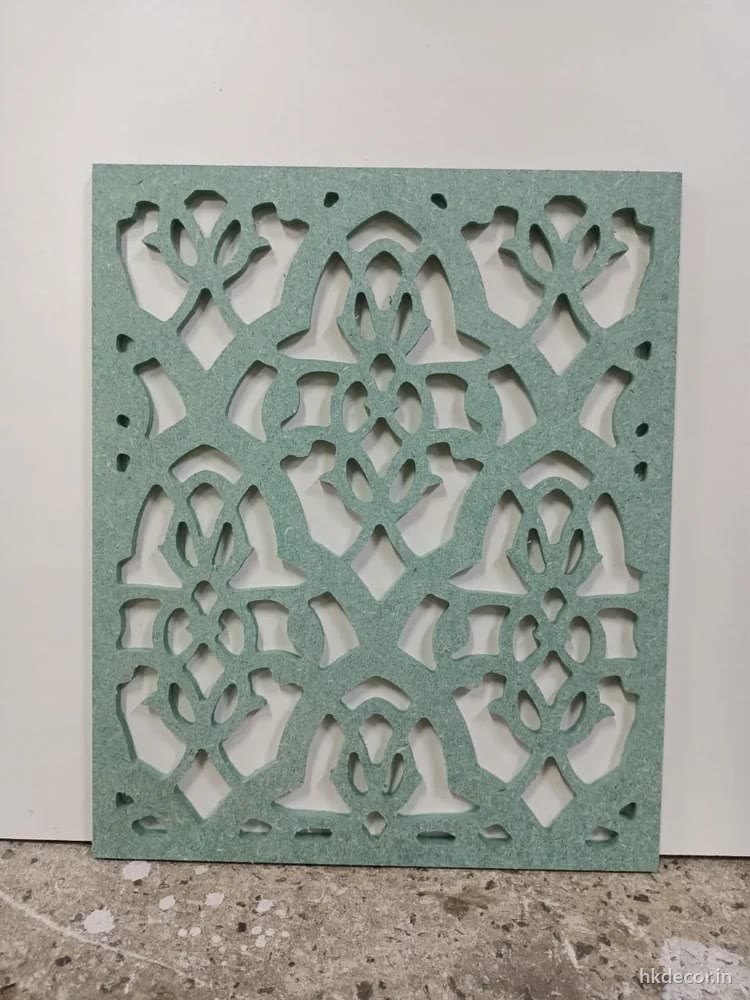
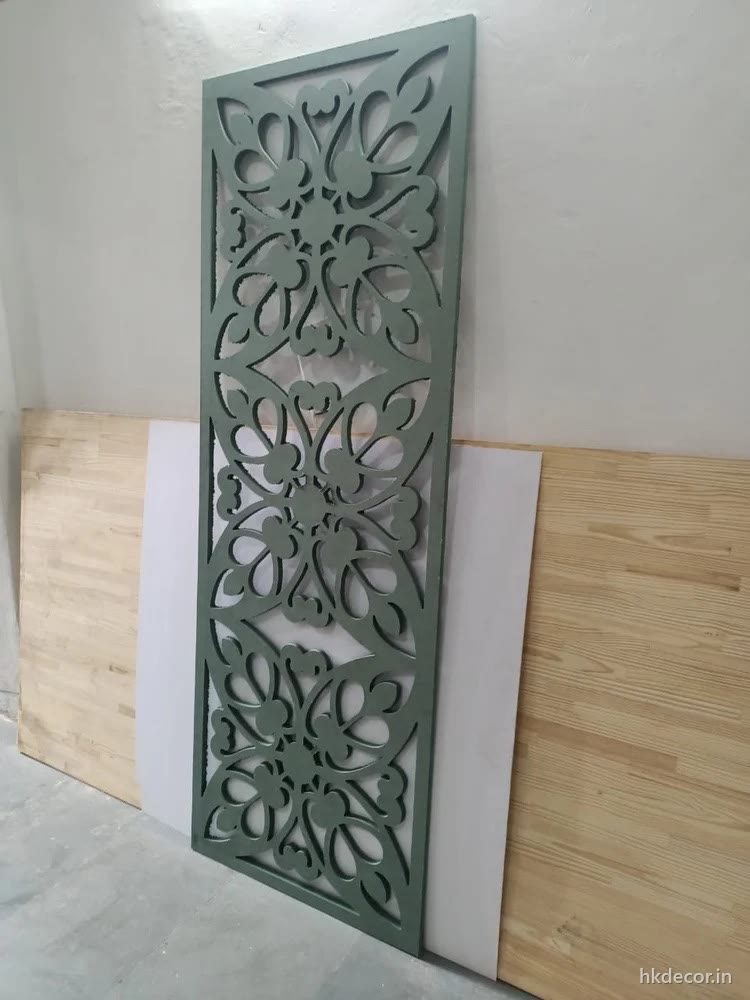
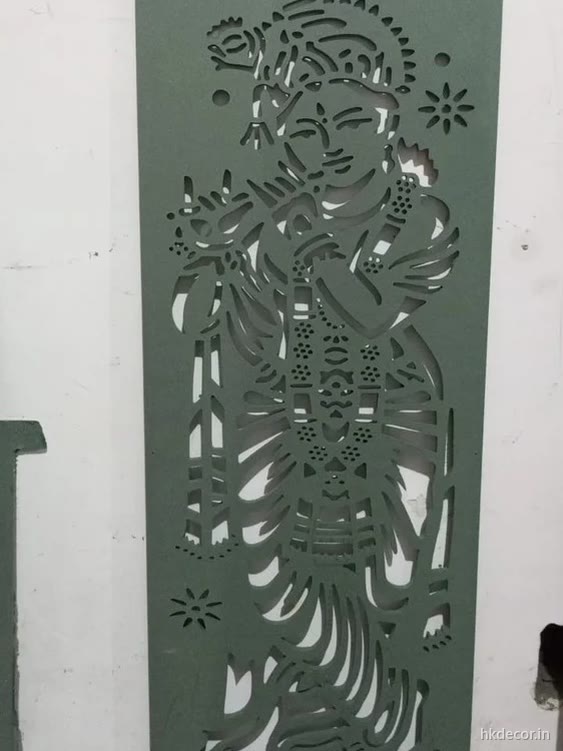
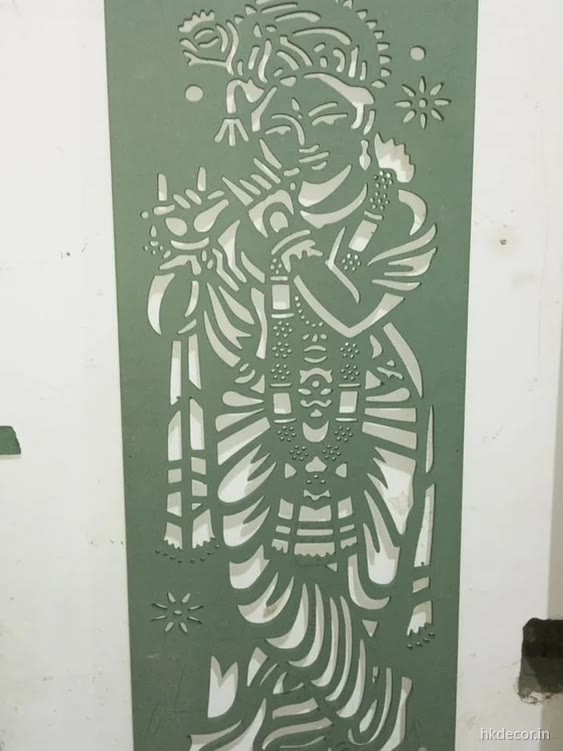
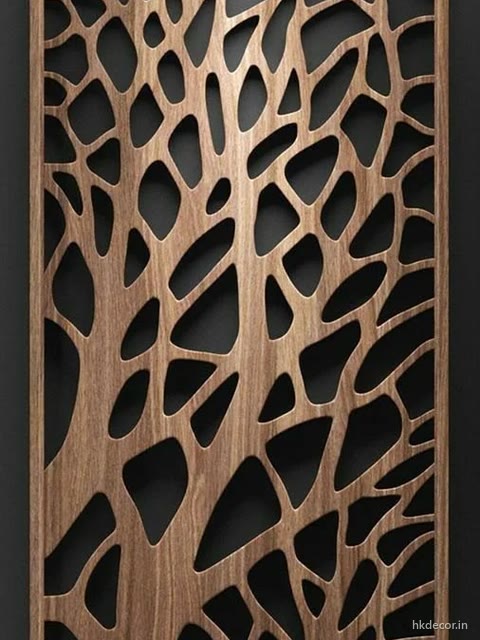
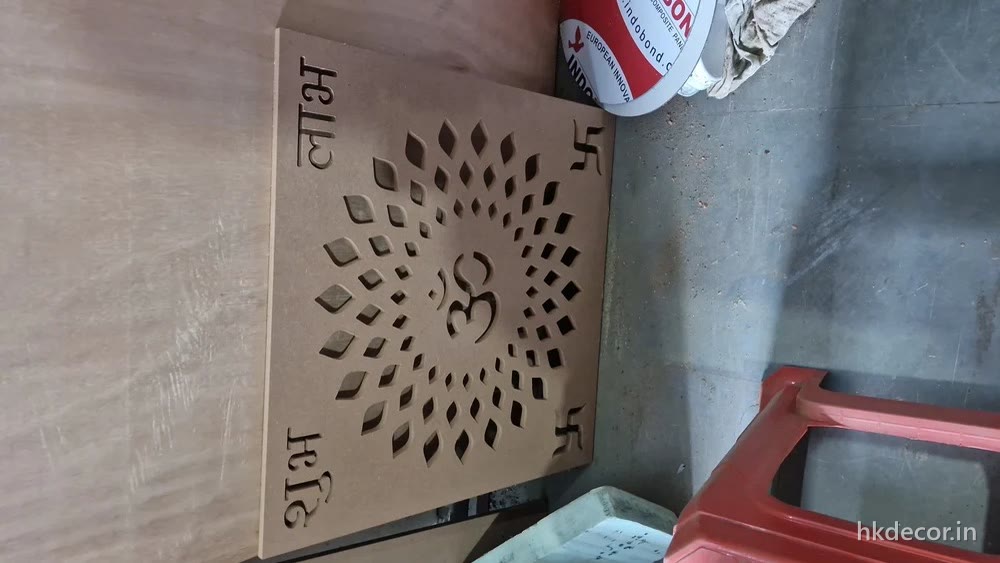
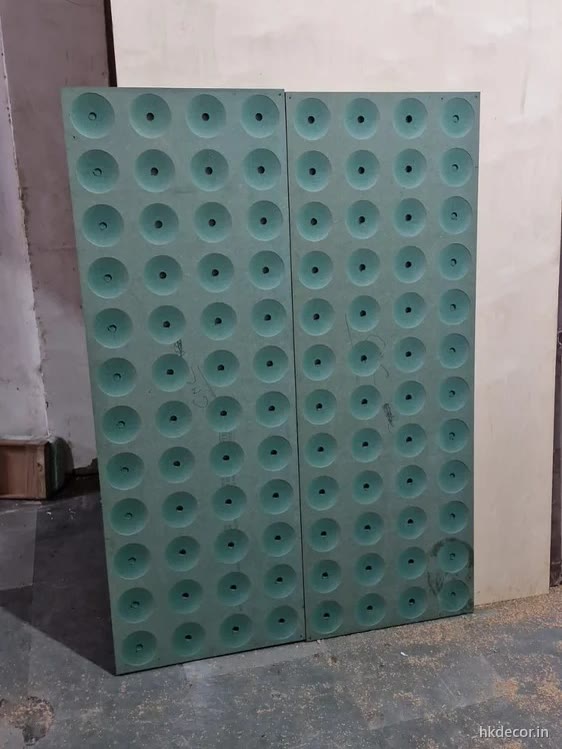
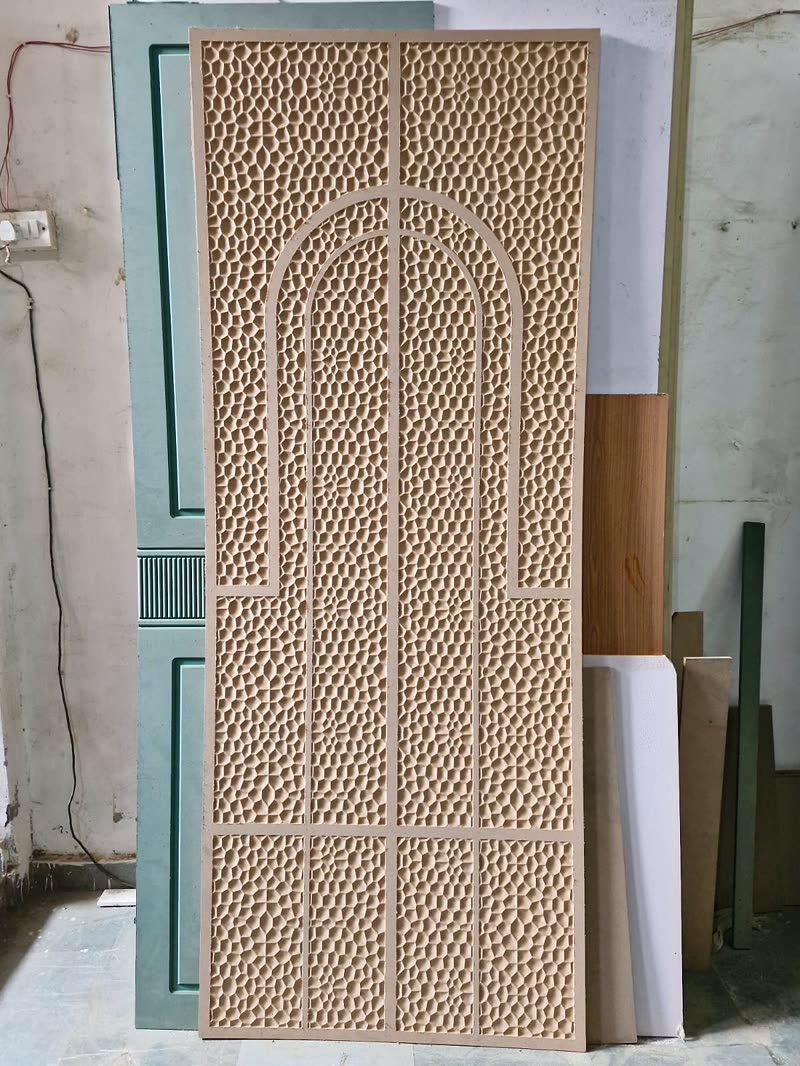
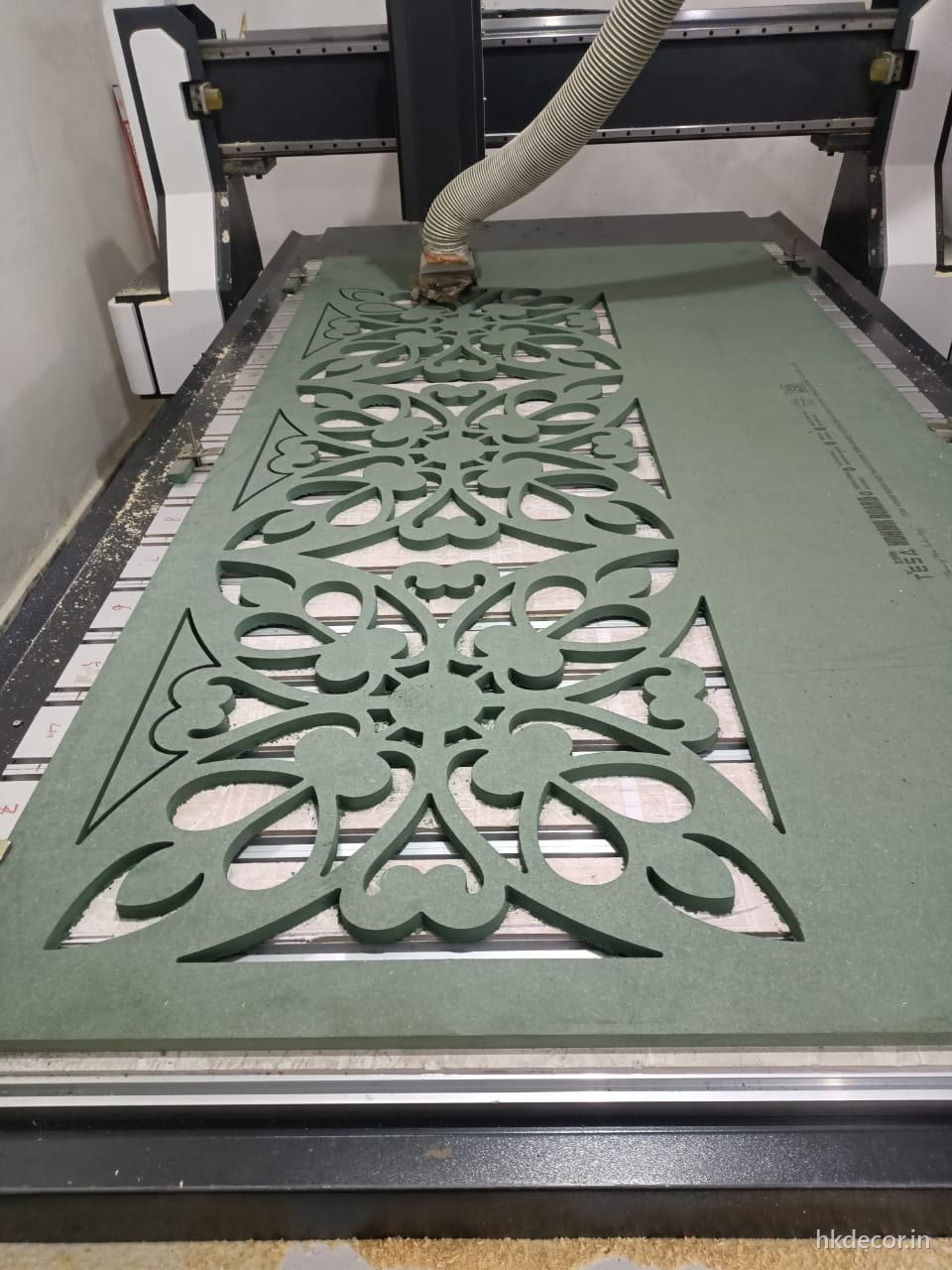
A jaali often sits next to a carved face — see 3D CNC doors, where the two are combined on one shutter.
What this is
CNC jaali cutting in Delhi is a structural problem before it is a pattern
Anyone can cut a nice pattern. What separates a jaali screen that survives ten years from one that sags in six months is how much board is left behind after the pattern is removed, and where that remaining material runs.
CNC jaali cutting in Delhi mostly gets specified for three jobs: a partition that separates without closing, a screen over a window or a duct that lets air and light through, and a decorative face over a solid wall. The first two carry themselves; the third does not have to. We ask which one it is before quoting, because the answer changes the minimum web width, the board and sometimes the pattern itself.
The rule we work to is that no unsupported web should be thinner than about 8mm in 12mm MDF, and continuous material has to run corner to corner in at least one direction — a pattern made only of isolated islands linked by thin bridges will rack. Where a client's chosen motif does not meet that, we thicken the webs by a millimetre or two rather than change the design; at normal viewing distance nobody sees the difference, and the screen stops flexing when a door slams.
Sized to the opening, not to the sheet
Screens get cut to the measured opening. That sounds obvious and it is where most jaali jobs go wrong: a pattern designed for a 1200mm width and then squeezed into 1140mm on site has a visibly compressed column at one end. We draft the motif to your dimension so it lands on a full repeat, or so the part-repeat falls behind the frame where nobody reads it. Openings taller than 3050mm are split, with the break placed along a structural line of the pattern and a horizontal rail hiding the joint.
The frame comes off the same file — MDF or ply frames for internal partitions, and a routed rebate that lets the screen sit flush rather than proud. Hinges, floor channels, cut-outs for a handle or a track: all machined, none drilled on site into a thin web.
Room dividers and free-standing partitions
A full-height divider that is not fixed to a wall at one edge needs more than a jaali panel. Practically, that means either a substantial frame around all four sides, a floor channel, or a heavier board — usually 18mm HDHMR rather than 12mm MDF, because HDHMR holds a screw right at the edge and stays flat over a 2.4m span where MDF would bow. Where the divider has to be movable, we build it as framed leaves rather than one panel.
Outdoors, on a balcony or in a wet area, the answer is waterproof WPC. It will not chip, it does not care about rain, and it holds a jaali pattern well as long as the webs are kept slightly wider than they would be in MDF.
Also on these machines
CNC and laser cut signage
Signage runs on the same beds and comes up in the same conversations, so it belongs here rather than on a page of its own.
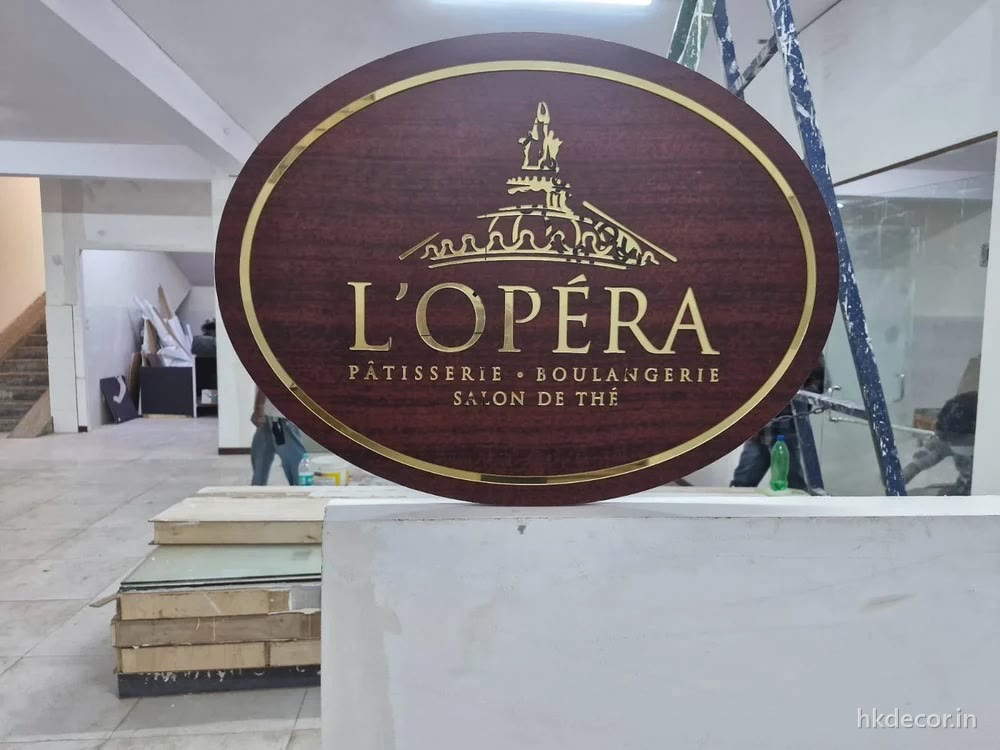
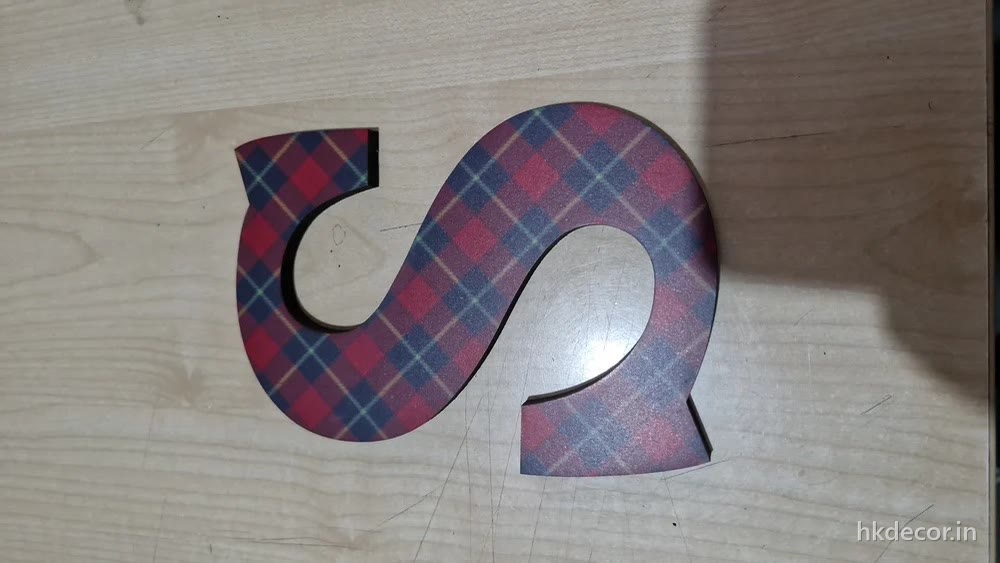
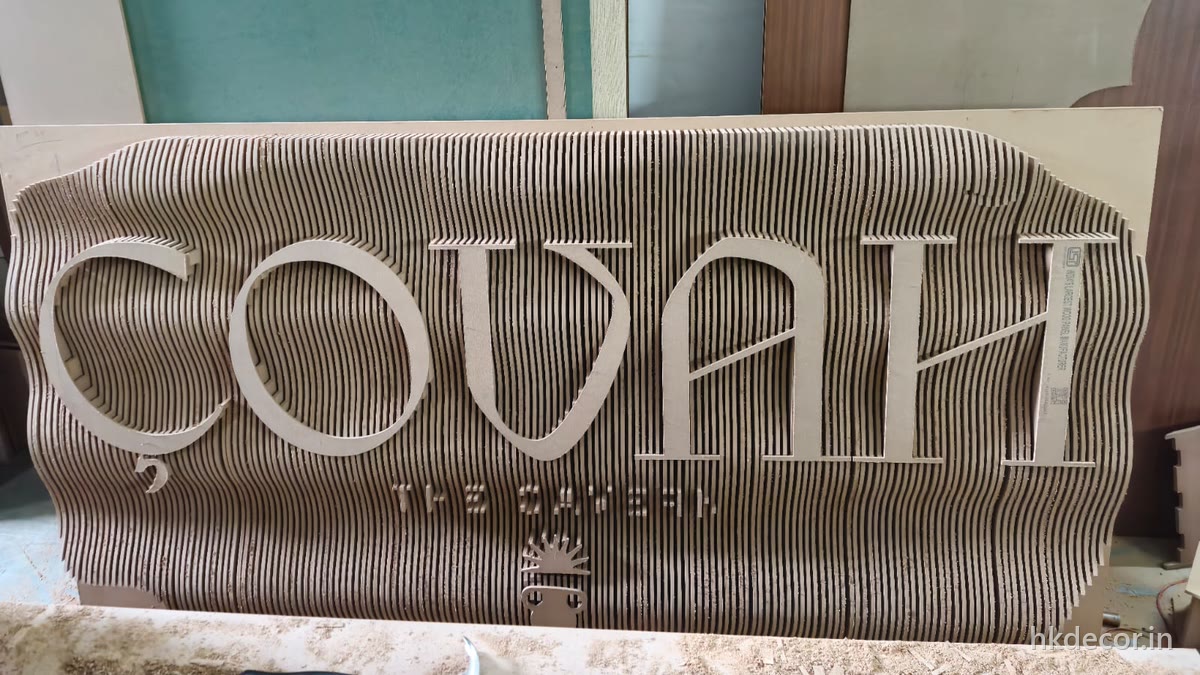
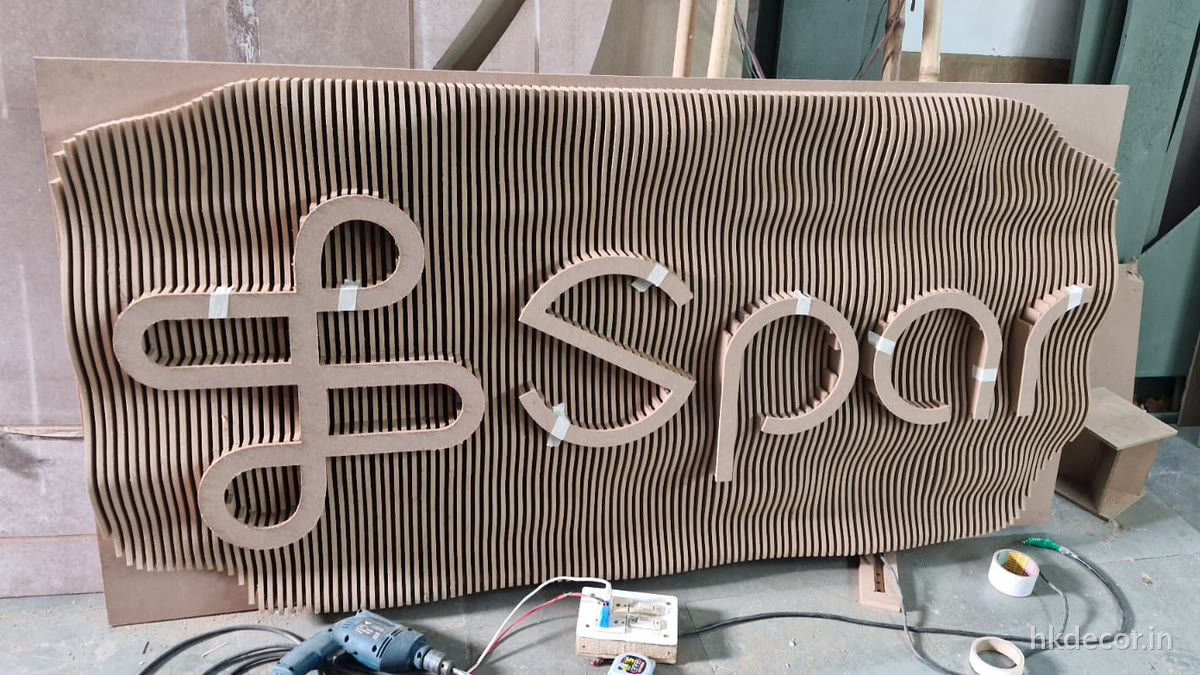
Cut lettering, logo panels and backlit signage in board — routed out of MDF or HDHMR for anything over 10mm or anything structural, and laser cut where the letterform has fine serifs, tight counters or small internal detail that a 3mm router bit cannot reach. Letters can be surface-mounted on stand-offs, recessed into a carved field, or backed with acrylic and lit from behind by your electrician; we cut the board and the mounting holes, we do not do the wiring.
Send the logo as vector artwork — AI, PDF, DXF or CDR with the type converted to outlines. A raster logo can be traced but the curve quality depends entirely on the resolution you send, and we will tell you before cutting if it will not hold up at size.
- Wordmarks and logos cut in 6mm–25mm board, painted, laminated or PU finished
- Signage raised out of a ribbed or parametric field, cut as one piece
- Backlit letter boxes and channel returns, cut and assembled ready for your LED
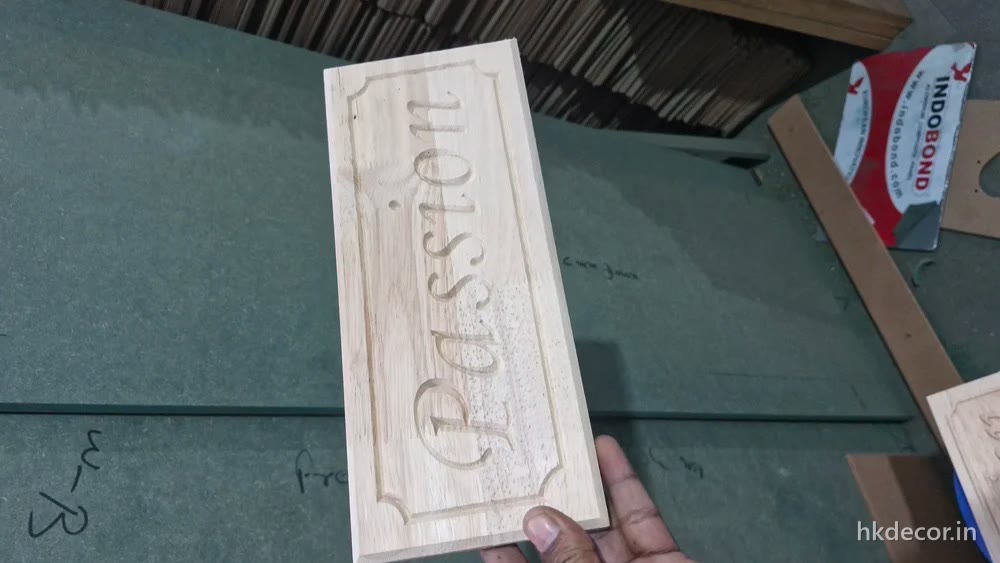
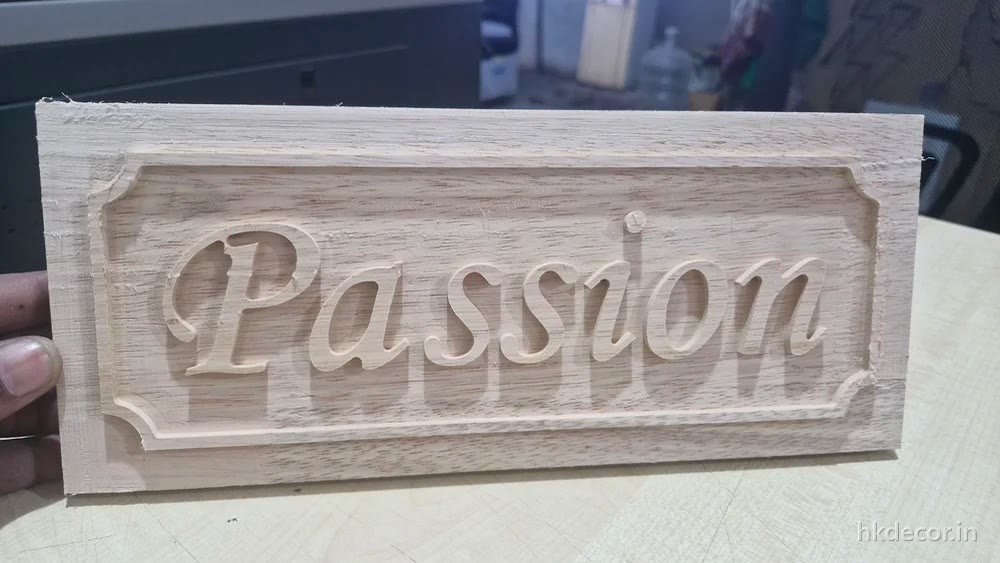
- Reception and directory panels, engraved rather than cut through
Materials · comparison
Which board for a jaali screen
The pattern comes second. What the screen has to hold up decides the board.
MDF
HDHMR
WPC
Marine-grade plywood is also cut for outdoor screens where the pattern is coarse — see the board guide for where ply beats WPC.
Still unsure?
Jaali datasheet · rev 08.2026
Jaali and partition specifications
- Beds
- 3 × 3-axis routers, 8ft × 4ft
1 × 3-axis router, 10ft × 5ft - Tooling
- 3mm–12.7mm straight cutters · 100W CO2 laser for fine work
- Max panel
- 3050mm × 1525mm in one piece · taller openings are split at a rail
- Board
- 12mm and 18mm MDF · 18mm HDHMR · 12mm and 18mm WPC · BWP ply
- Minimum web
- 8mm MDF · 10mm HDHMR · 12mm WPC
- Minimum hole
- 4mm on the router · 1.5mm on the laser in thin board
- Internal radius
- 1.5mm on a 3mm cutter — sharp corners need the laser
- Tolerance
- ±0.3mm across the bed
- Frames
- Cut from the same file, with a routed rebate so the screen sits flush
- Fixing
- Concealed cleats, floor channel or wall rebate — machined, not site-drilled
- Setting out
- Motif drafted to your measured opening so it lands on a full repeat
- Signage
- Vector artwork with type as outlines · router over 10mm, laser under
- Turnaround
- 7–10 working days · 3–4 days express
- Installation
- Across Delhi NCR · pan-India dispatch
FAQ
Jaali and partition questions
How thin can the webs between the holes be before the screen becomes fragile?
About 8mm in 12mm MDF for an internal screen, 10mm in 18mm HDHMR, 12mm in WPC. Below that a web will flex when the panel is handled and can snap in transit. We also check that continuous material runs corner to corner in at least one direction — a pattern of islands joined by thin bridges racks even when every web meets the minimum.
Can a jaali partition stand on its own without a wall to fix to?
Yes, but not as a bare panel. It needs a frame on all four sides, a floor channel, or both, and usually 18mm HDHMR rather than 12mm MDF so it stays flat over a full-height span. If it also has to be movable, we build it as framed leaves rather than a single sheet. Tell us it is free-standing at enquiry stage — it changes the whole build.
Will the pattern get squashed to fit my opening?
No. We draft the motif to your measured opening so it ends on a full repeat, or so the part repeat sits behind the frame. Scaling a pattern designed for a different width is what produces the compressed column at one end that gives cheap jaali away, and it is avoidable at drawing stage for free.
Can a CNC jaali screen go on a balcony or in a bathroom?
In waterproof WPC, yes — including full exterior positions. Marine-grade plywood works for coarser outdoor patterns. MDF will swell and we will not quote it for a wet or exposed position, whatever the drawing says.
What is the smallest hole you can cut in a jaali?
4mm on the router, which is set by the smallest bit we can run safely through board thickness. The laser goes finer — down to about 1.5mm in thin board — so a very delicate filigree jaali is a laser job in 4mm to 8mm material rather than a router job in 12mm. Sharp internal corners are the same story: the router leaves a 1.5mm radius, the laser leaves a true corner.
Do you supply the frame and fix it, or only cut the screen?
Either. Most orders include the frame, cut from the same file with a rebate so the screen sits flush, plus concealed cleats or a floor channel. We install across Delhi NCR. Outside NCR we send it edge-protected with a fixing drawing for your site team.
Other services
We also cut
Contact
Send the drawing. We reply today.
Email us [email protected] · attach DXF, PDF or a photo- Workshop
- Bijwasan, New Delhi
- [email protected]
- Hours
- Mon–Sun, 9:00am – 7:30pm
- Serving
- Delhi · Gurugram · Noida · Faridabad · Ghaziabad · pan-India dispatch
Prefer a form? It reaches the same team.