HDHMR vs MDF for CNC work, and when neither is right
A working guide to the six boards we cut every day — MDF, HDHMR, waterproof WPC, plywood, rubber wood and compact sheet — written from what they do on the machine and on site, not from a supplier's datasheet.
The short answer
HDHMR vs MDF for CNC, in two sentences
Specify MDF when the piece is carved, painted and stays dry. Specify HDHMR when the panel is large, screwed, wall-hung or in a humid room. Neither belongs anywhere water actually reaches — that is WPC — and neither is the right substrate when you need real structural strength or visible grain, which is plywood.
That covers most decisions. The rest of this page is why, and the handful of cases where the obvious answer is wrong.
One thing worth saying at the start: four of the six are engineered boards, one is solid timber and one is a pressed laminate panel. We cut those and nothing else — no metal, no acrylic, no stone. If your detail genuinely needs one of those, we will say so rather than talk you into a material that will not do the job.
Board by board
MDF: the best material for CNC carving, with one weakness
Medium-density fibreboard has no grain and no voids, which is exactly what a cutter wants.
That homogeneity is why MDF carves cleaner than anything else we run. A ball-nose bit tracing a 3D relief leaves a surface that needs almost no sanding; a fine jaali web comes off the bed with a sharp edge instead of a furry one; and a 6mm rib pitch holds without crumbling. It also takes primer and PU better than any other board here, which matters more than people expect — a painted carving lives or dies on how sharp the shoulder of each cut stays under three coats of finish.
The weakness is water, and it is absolute rather than a matter of degree. MDF is compressed wood fibre and glue; wet it and the fibres swell irreversibly. A splash dries out with a slightly raised edge you can feel. Standing water destroys it. This is why we will not quote MDF for a bathroom wall, a balcony, a planter face or a covered-but-open terrace, even when the drawing asks for it. 18mm MDF is the default for wall panels and jaali; 25mm and 30mm for doors and anything that has to feel solid.
HDHMR: denser, flatter, and it holds a screw
High-density high-moisture-resistant board is made the same way as MDF but pressed harder, with a resin system that tolerates humidity.
Two properties earn it a place. First, it stays flat: an 18mm HDHMR panel spanning 2.4 metres holds its plane where the equivalent MDF would develop a visible bow, which is why free-standing jaali partitions and tall shutters get specified in it. Second, it holds a screw right at the edge — no insert, no pilot-and-pray. Hinges, floor channels, wall cleats and hanging systems all work directly in it, and that is the single biggest reason to pay the premium.
The trade-off is that it is denser, so tooling wears faster and machine time is slightly longer, and the very finest carving is marginally softer than in MDF. "Moisture-resistant" also does not mean waterproof: HDHMR survives a humid Delhi lobby or a semi-open corridor. It does not survive standing water, and we do not specify it as if it did.
WPC: the waterproof panel for outdoor jaali and wet areas
Wood-plastic composite is the only board on this list that genuinely does not care about water.
Balconies, facades, bathroom walls, planter faces, terrace screens, utility areas — anywhere rain, spray or standing water reaches, this is the answer, and there is no second option worth discussing. It is light for its thickness, it never chips at a cut edge, and a waterproof panel for an outdoor jaali in WPC will still be flat in five monsoons.
What you give up is edge crispness. WPC is softer under the cutter, so the edge is rounder than MDF's and fine detail loses definition. We keep jaali webs about 12mm rather than 8mm, and fluting pitch at 30mm and up, because a fine web in WPC will flex. Paint needs the correct key coat first — this is the most common WPC failure we see on site, and it is a finish problem rather than a board problem. Laminate, lacquer and foil go on directly.
Plywood: strength and grain, not carving
Plywood is the strongest engineered board per millimetre and the only sheet material here with real grain, and neither of those helps a carved face.
Cut a fine pattern into ply and two things go wrong: the grain tears on tight internal detail, and every ply line reads as a stripe down the flank of the cut. It is excellent for what it is actually for — frames, substructures, battens, soffits, pergolas, and anything a panel has to hang off. BWP ply and CNC cutting also go together well for coarse outdoor screens where the pattern is chunky enough that grain tear does not show, and marine grade will outlast WPC structurally in an exposed position even if it does not match it for maintenance-free life.
Where the design wants visible timber, veneered ply or a veneered MDF face is a better route than carving into raw ply.
Rubber wood: solid timber, where a board face will not do
Everything else on this page is a sheet. Rubber wood is not — it is solid hardwood, sold as planks and glued-up sections.
That changes what it is for. A board gives you a face; rubber wood gives you a section. Frames, beading, edging, a leg, a nosing, anything that has to be thicker than a sheet or hold a screw driven into its end grain. It machines cleanly on the router at 12mm to 50mm, takes stain and polish well, and the open grain is visible and meant to be — if you wanted a uniform painted surface you would be using MDF.
Two cautions. It is a timber, so it moves: it wants seasoning before machining and sealed edges afterwards, and it belongs indoors. And because it is solid, a wide panel is glued up from strips — the glue lines read under a clear finish, which is either the look you want or the reason to choose something else.
Compact sheet: the one that needs no finishing at all
High-pressure laminate compressed into a solid panel, coloured all the way through. It arrives finished.
Nothing else here survives what compact sheet survives. It is unaffected by steam, standing water or scrubbing, which is why it is the standard for toilet cubicles, lockers, laboratory tops and exterior panels. From 12mm it is self-supporting — a cubicle door needs no frame behind it. Edges are machined and polished rather than banded, and because the colour runs through the sheet a cut edge is part of the finish rather than something to hide.
The trade-offs are density and cost. It is extremely hard on tooling, cuts slower than any board on this page, and carries a price to match, so it is specified where the abuse justifies it and rarely anywhere else. It also takes no paint — the sheet is the finish, so the colour has to be chosen at order stage.
Comparison
The six boards, side by side
Compared on what changes the result on site rather than on published specification.
By job
What we would specify, job by job
The board follows the job, not the other way round. These are the calls we make most weeks.
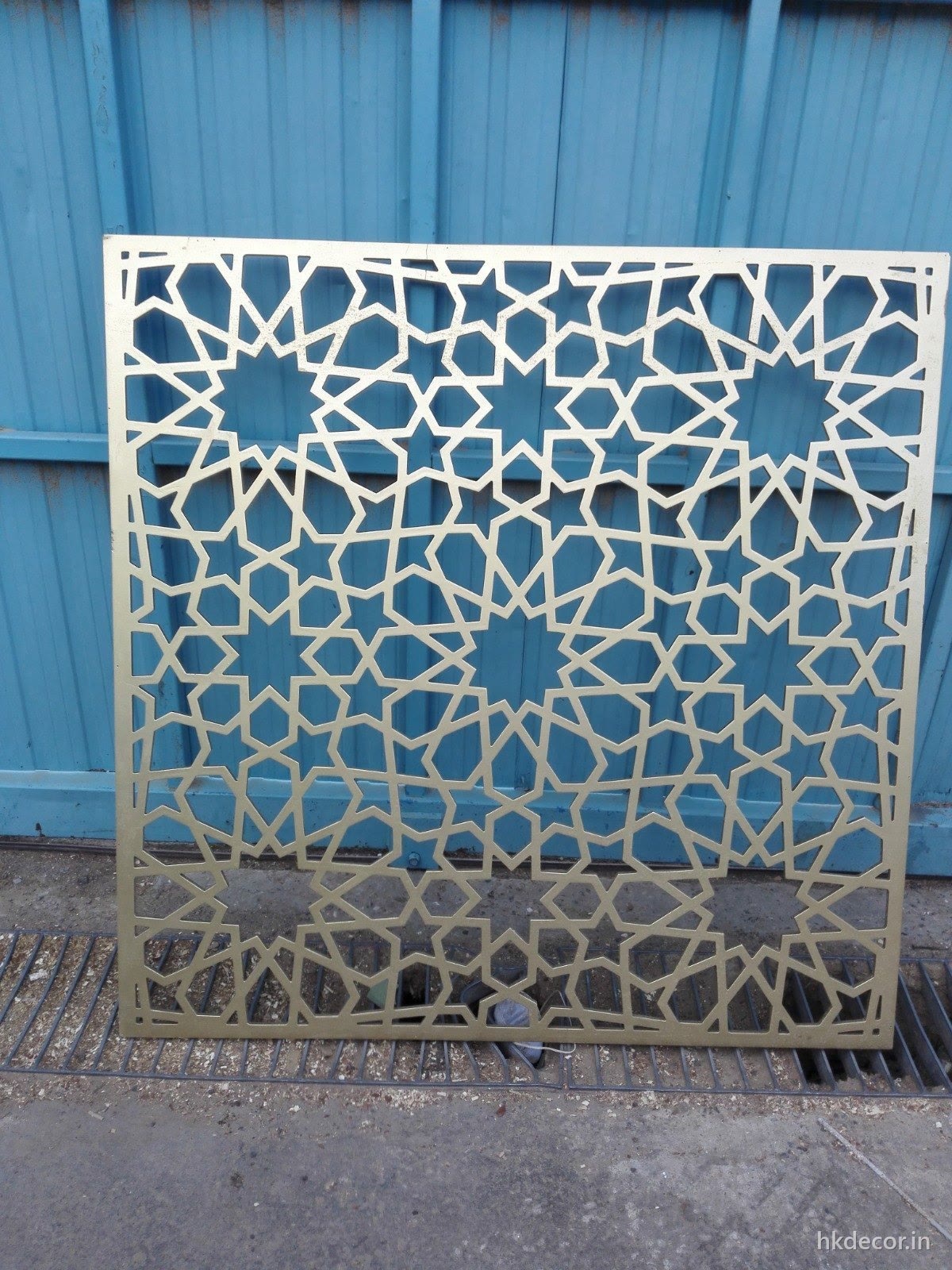
- Best material for a CNC jaali, indoors: 12mm or 18mm MDF. It holds the finest web and takes paint best. Go to 18mm HDHMR the moment the screen is free-standing or taller than about 2.4m.
- Jaali outdoors or in a bathroom: WPC, webs kept about 12mm. Marine ply if the pattern is coarse and the screen is structural.
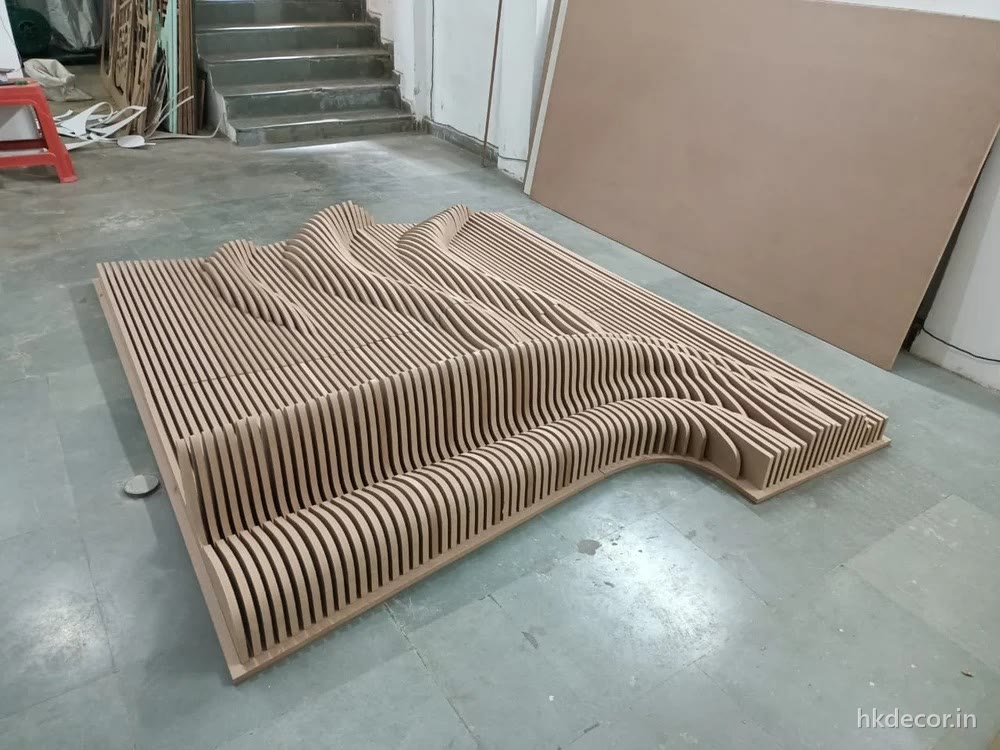
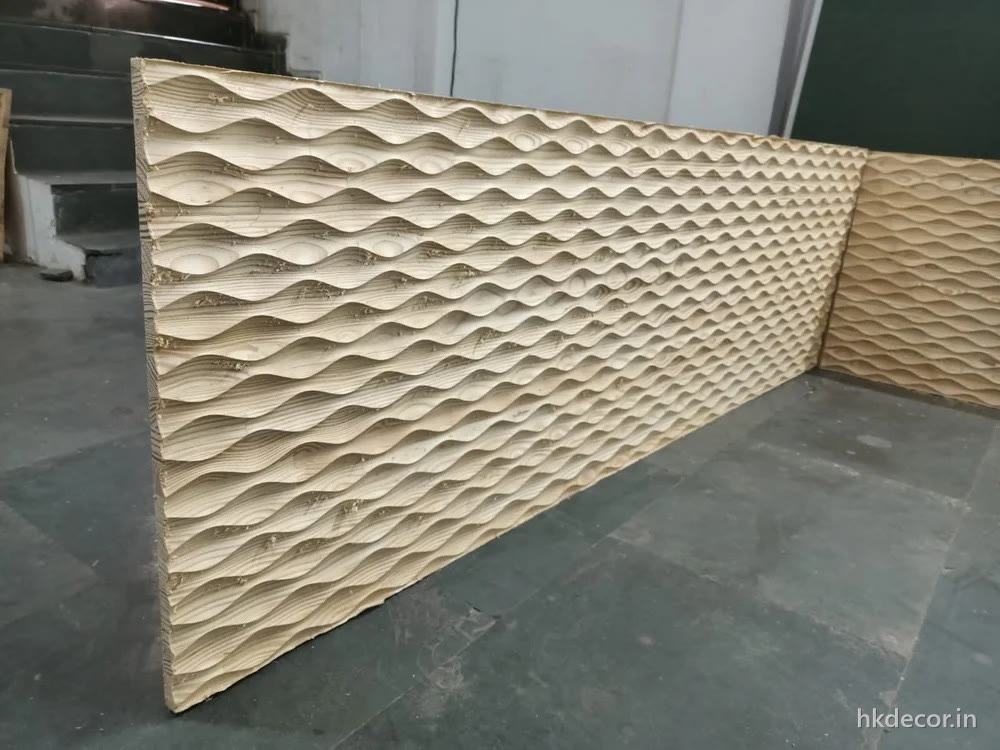
- Parametric wave or rib wall, indoors: 18mm MDF. HDHMR if the panels hang off a rail rather than sitting on a substructure. Details on the parametric wall panel page.
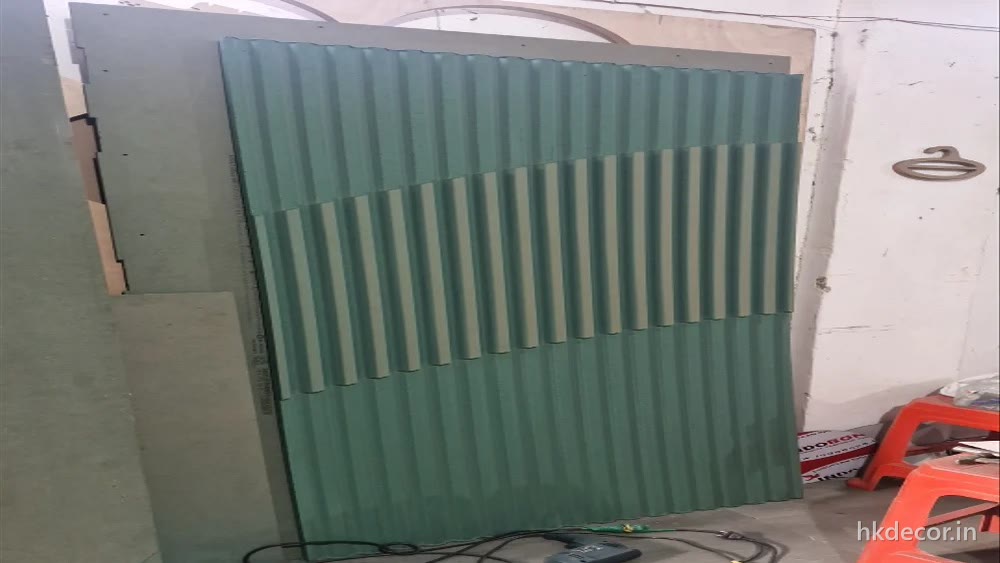
- Fluted TV unit or headboard: 18mm MDF, painted. Fluted WPC only if it is a bathroom or a balcony.
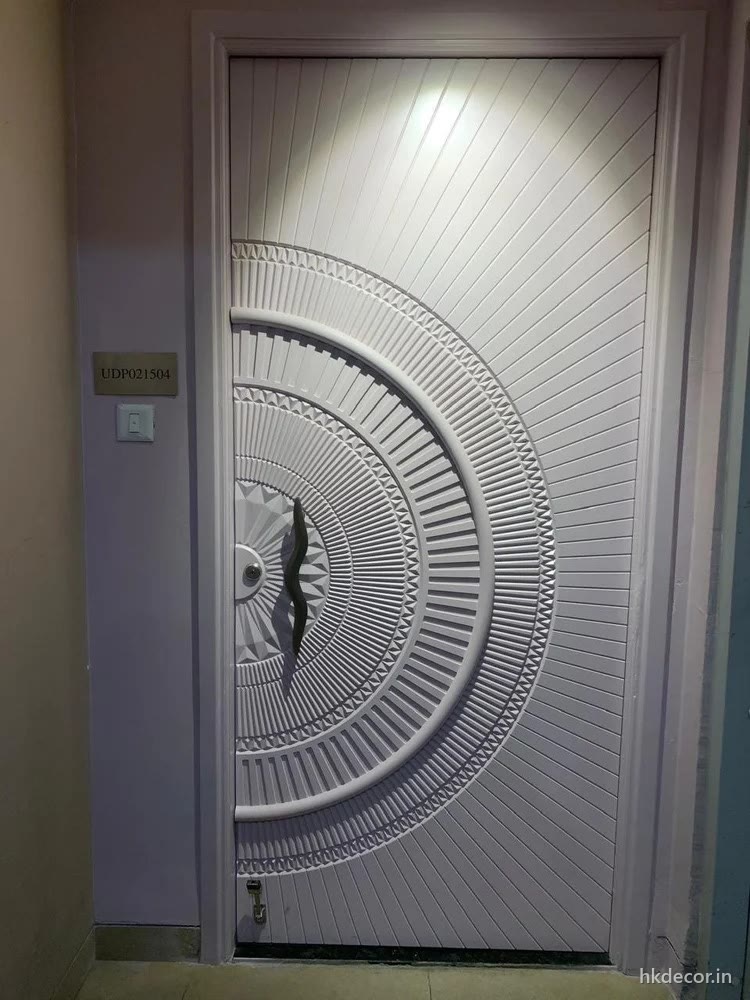
- Main door or pooja door: 30mm HDHMR for the shutter if it is heavy or tall, 30mm MDF if the carving is fine and the door is internal. See 3D CNC doors.
- Signage panel: HDHMR for anything wall-mounted and sizeable, MDF for indoor lettering that will be painted, WPC for outdoors.
- Ceiling ribs and baffles: MDF, kept as thin as the span allows — weight is the constraint, not detail.
- Substructure behind any of the above: plywood. It is the sheet material we would hang a panel off; rubber wood is the one we would make a solid frame from.
If your job is not on that list, send the drawing and we will tell you what we would cut it in and why. There is no charge for the answer, and it takes a couple of minutes by email.
On the floor
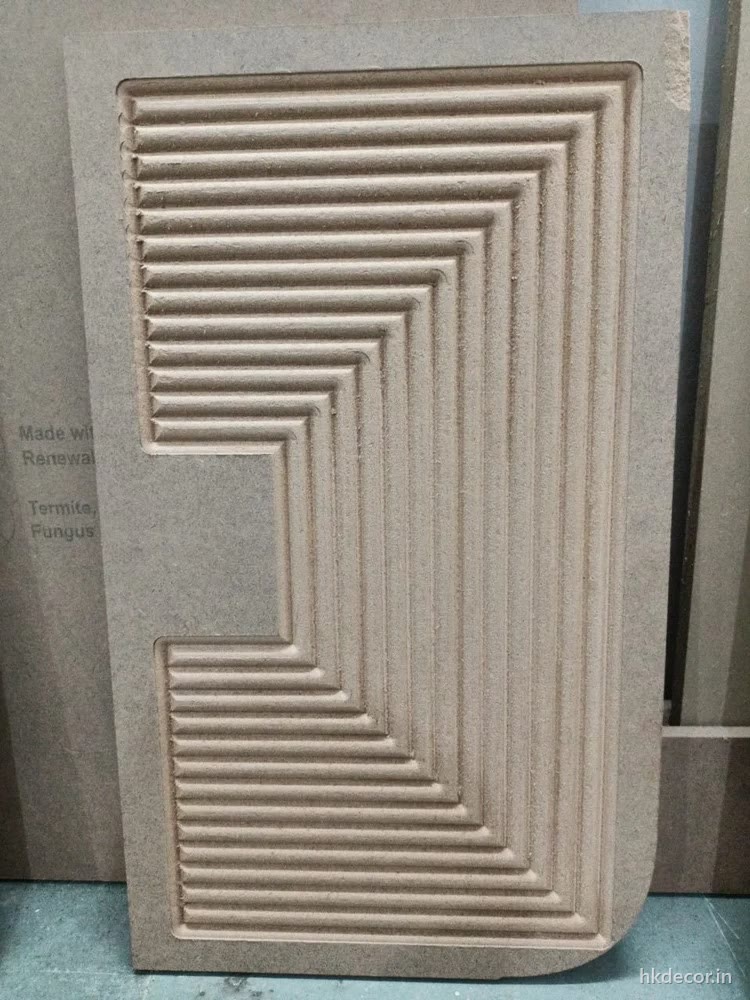
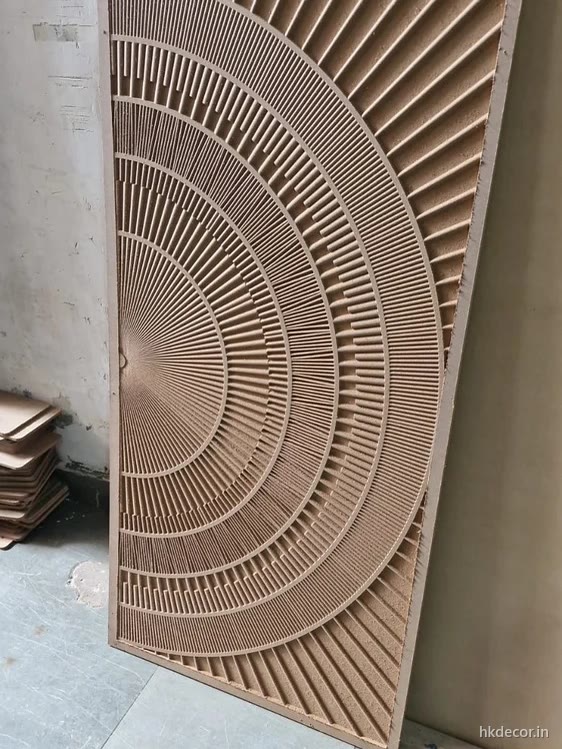
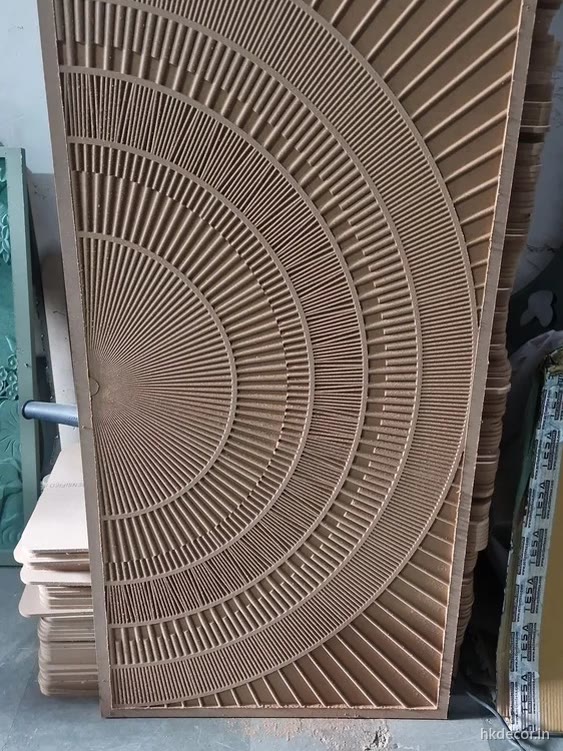
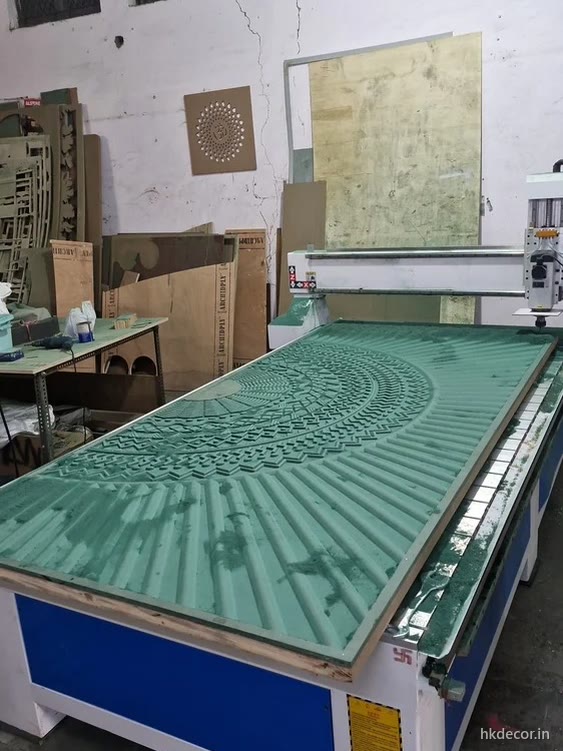
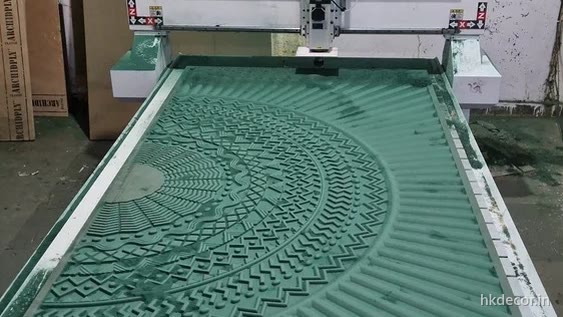
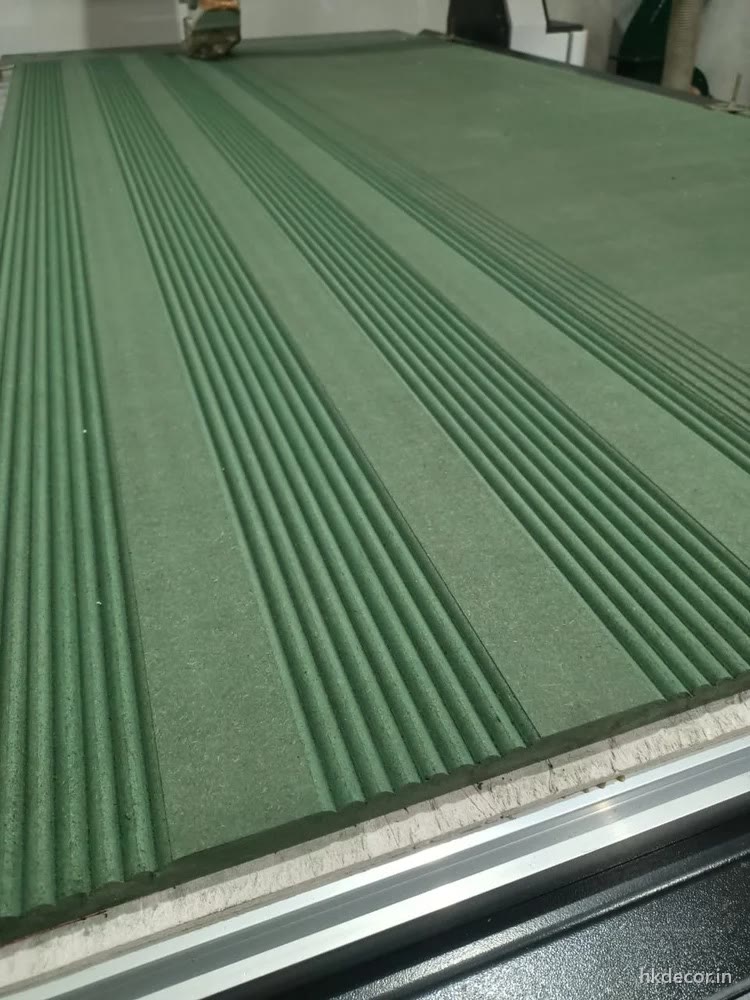
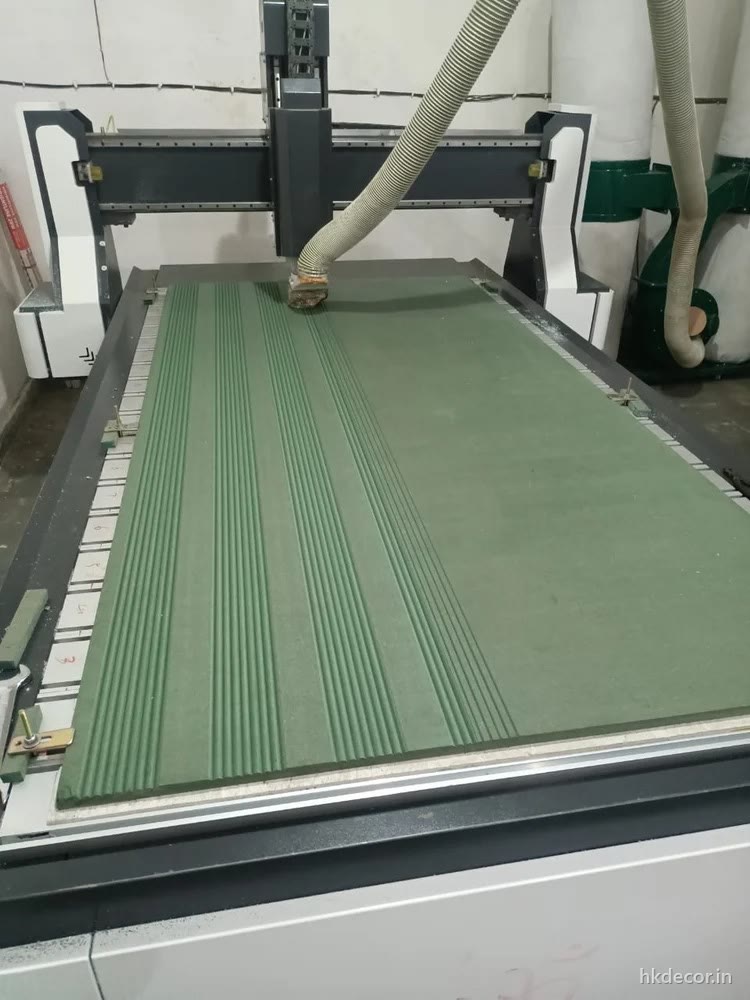
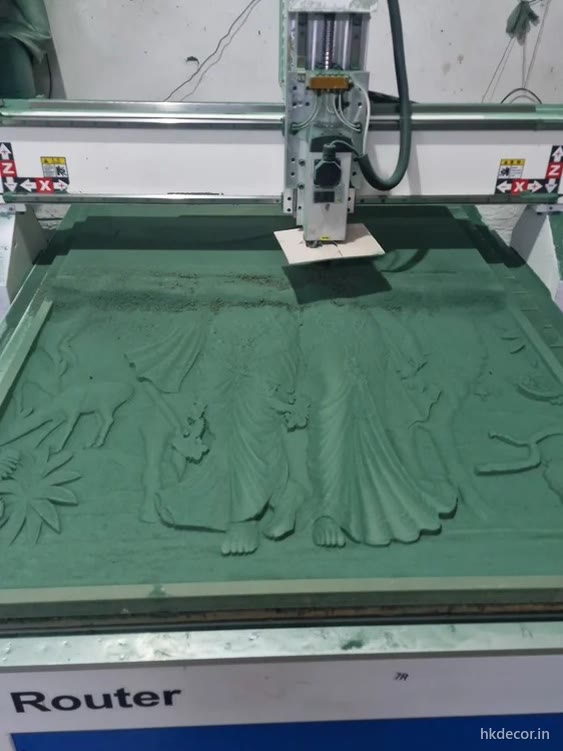
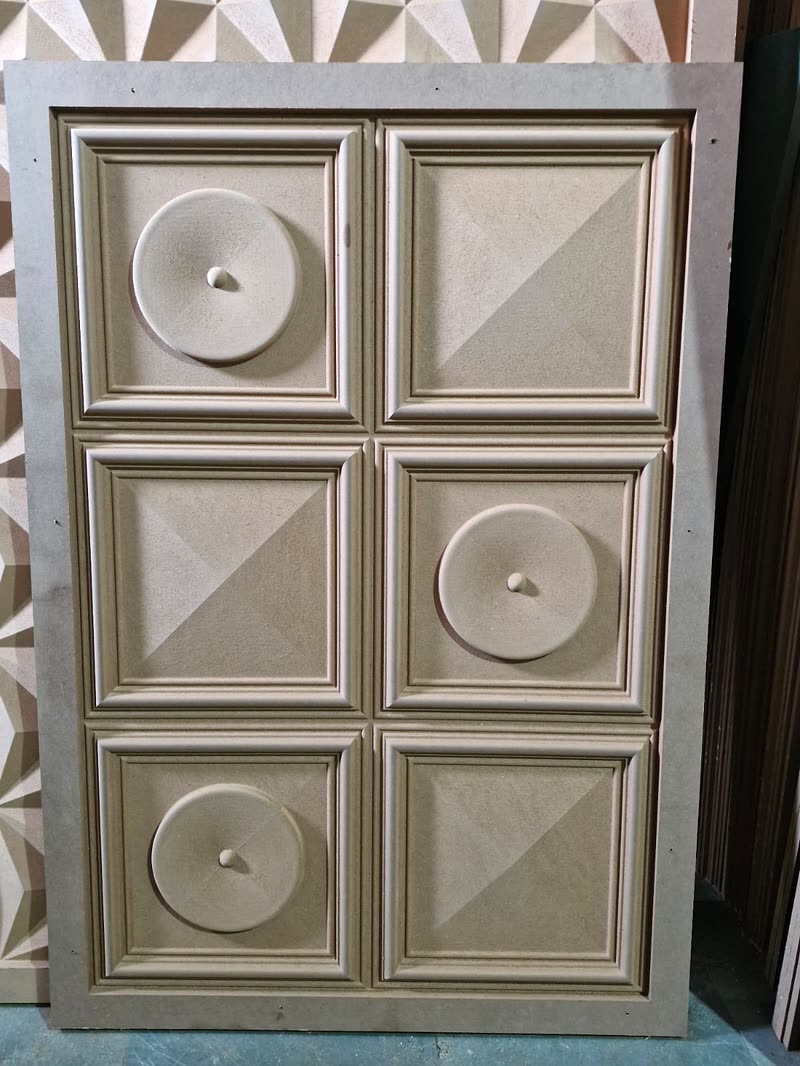
What these boards look like once they are cut
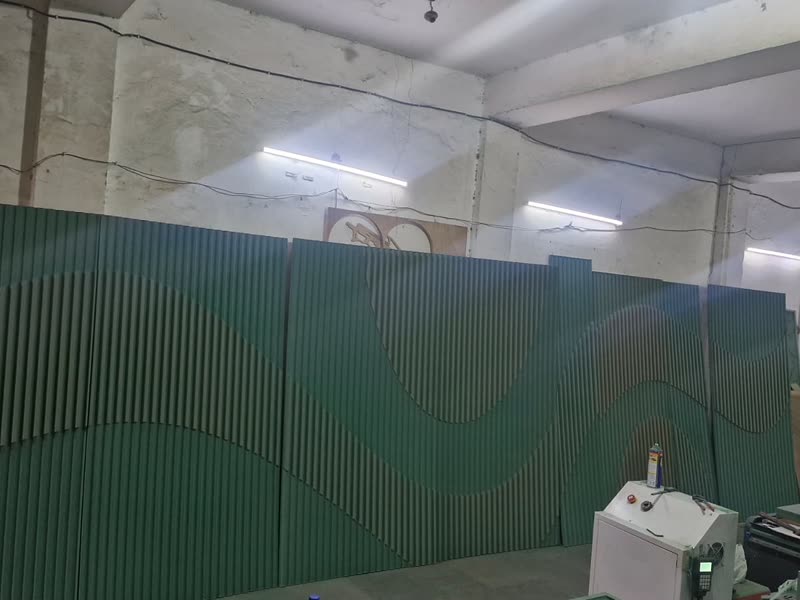
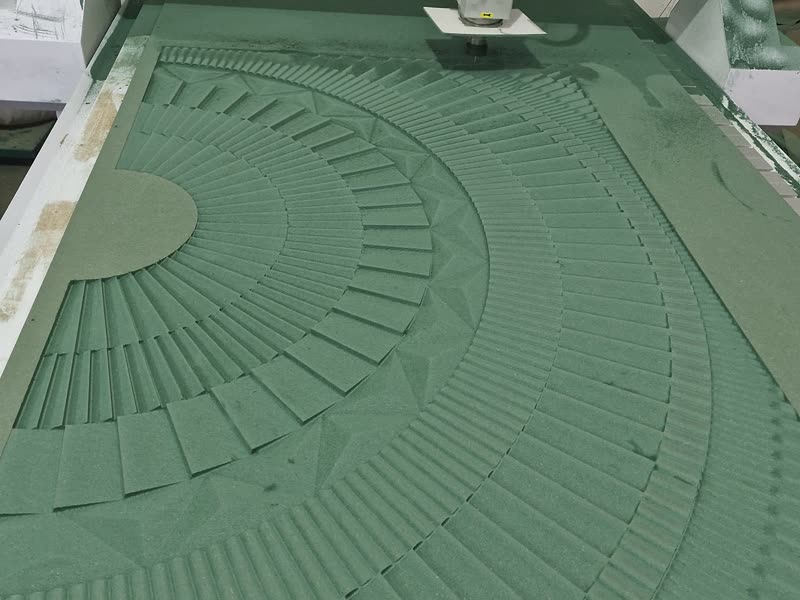
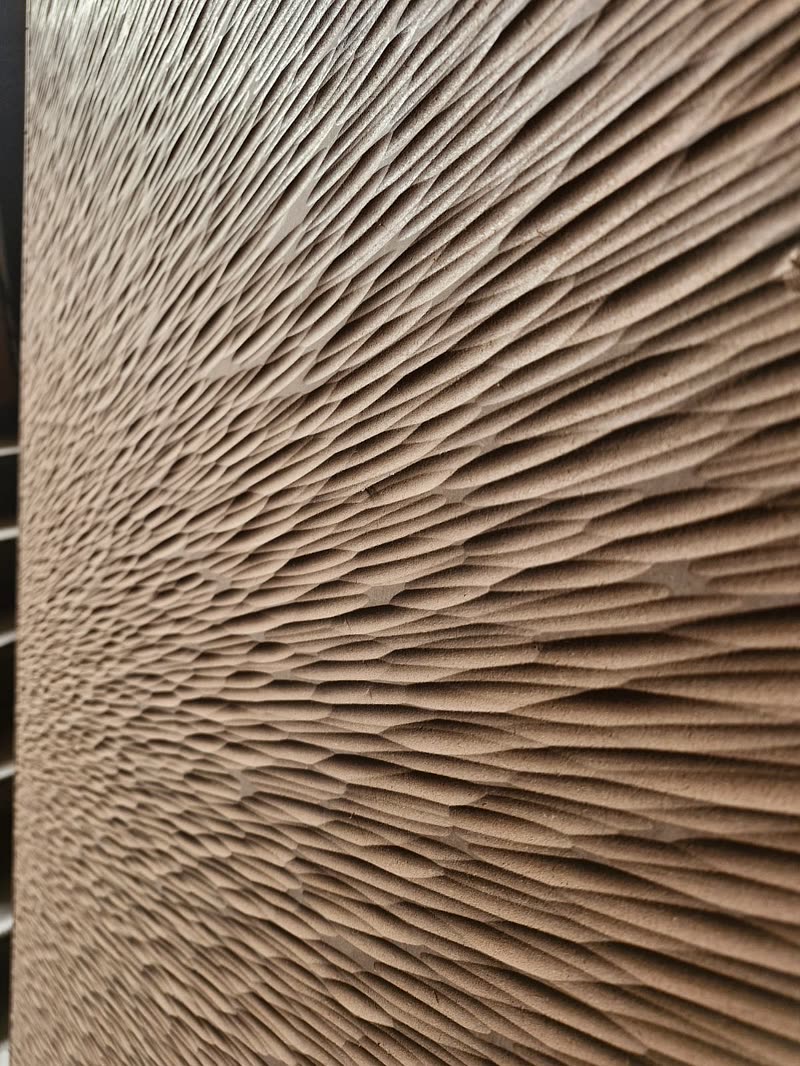
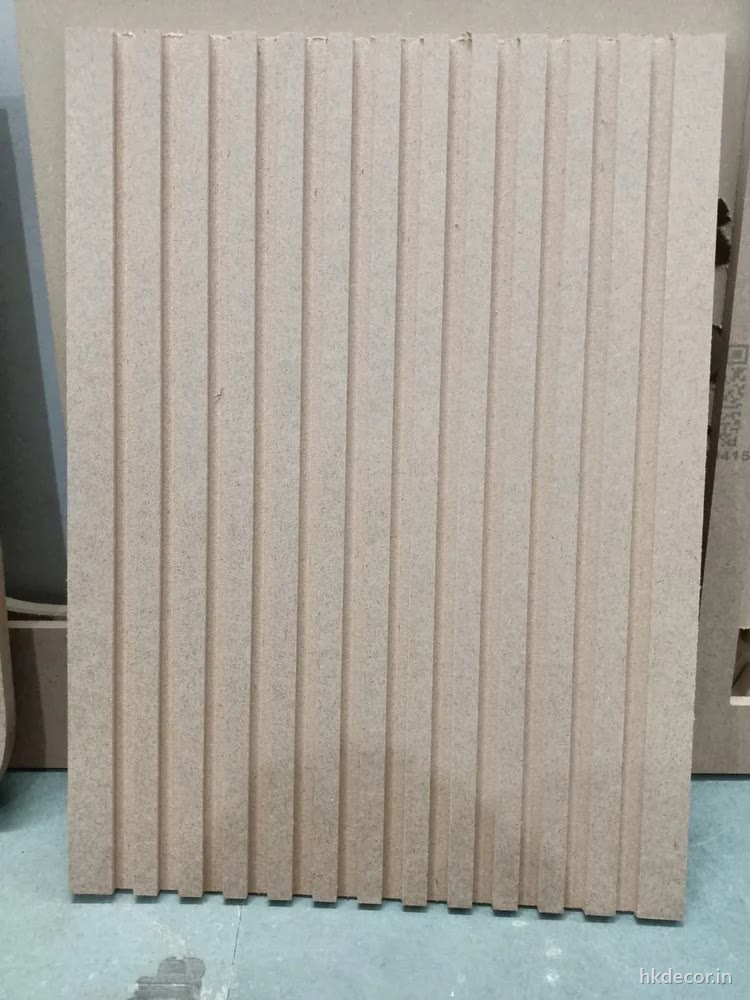
All photographed at the Bijwasan unit. Boards are shown primed, which is how most panels leave here.
Board datasheet · rev 08.2026
What we stock and cut
- MDF
- 6 · 8 · 12 · 16 · 18 · 25 · 30mm
- HDHMR
- 6 · 12 · 16 · 18 · 25mm
- WPC
- 6 · 8 · 12 · 18mm, fully waterproof
- Plywood
- 4 · 6 · 12 · 19mm · commercial, BWP and marine grade
- Sheet size
- Up to 3050mm × 1525mm (10ft × 5ft)
- Not cut here
- Metal · acrylic · stone · solid hardwood
- Router range
- 4mm–30mm through-cut · 3D relief to 22mm
- Laser range
- Up to 10mm on the 100W CO2
- Tolerance
- ±0.3mm across the bed
- Sampling
- A cut sample in your board and finish before any run over 100 sq ft
- Finishing
- PU · duco · lacquer · polishing
- Material supply
- We buy the board, or cut yours if you supply it
FAQ
Board questions
Is HDHMR just a more expensive MDF?
No — the difference is real and specific. HDHMR is pressed to a higher density with a moisture-tolerant resin, so it stays flat over a full-height span and holds a screw right at a panel edge without an insert. If your panel is small, dry and screwed nowhere near the edge, MDF does the same job for less. If it is tall, wall-hung or carries hinges, the premium buys something you cannot fake.
Can I cut 18mm MDF for a bathroom if it is well sealed and painted?
We would not, and we do not quote it. Sealing helps against splash but every cut edge, screw hole and site trim is an opening, and a carved face has a great many of them. The failure is not immediate — it shows up as a swollen edge six to eighteen months in, by which point the panel is finished, fitted and expensive to replace. Use WPC.
Which board gives the cleanest edge on a laser?
MDF and thin plywood. MDF cuts with a consistent dark edge that most people accept or paint; ply varies with the glue line and can leave a slightly heavier scorch at each layer. WPC is not a laser material — it melts rather than cuts and gives off fumes we do not run on the CO2. Thickness limits and the router-versus-laser decision are covered on CNC routing vs laser cutting.
Does the board change how much a job costs?
Yes, in two ways. The sheet price differs — plywood and WPC generally sit above MDF, HDHMR between — and the machine time differs, because a denser board is cut slower and wears tooling faster. On a deep 3D carving the machine time usually outweighs the sheet price, so a "cheaper" board can end up costing more. We price both parts when we quote.
Can I supply my own board for you to cut?
Yes. Send it to the Bijwasan unit and we cut it as a machining job. Two conditions: it has to be flat and dry when it arrives — a bowed sheet cannot be held to ±0.3mm and we will tell you rather than cut it — and we cannot guarantee finish adhesion on board we did not choose. Most clients let us buy it, because we know which brands cut well.
What thickness should I specify if I do not know?
18mm is the honest default for wall panels, jaali and most carved work; 25mm or 30mm for doors and anything that has to feel solid to the hand; 12mm where weight matters, such as a ceiling; 4mm to 8mm for laser-cut detail and inlay. Send the drawing with what the piece has to do, and we will confirm the thickness before quoting.
Other services
We also cut
Contact
Send the drawing. We reply today.
Email us [email protected] · attach DXF, PDF or a photo- Workshop
- Bijwasan, New Delhi
- [email protected]
- Hours
- Mon–Sun, 9:00am – 7:30pm
- Serving
- Delhi · Gurugram · Noida · Faridabad · Ghaziabad · pan-India dispatch
Prefer a form? It reaches the same team.