3D CNC door manufacturer in New Delhi
Carved main doors, pooja doors and door skins cut to depth in MDF and HDHMR on our own routers in Bijwasan, then primed, PU-finished, duco-sprayed or polished in the same building.
Projects
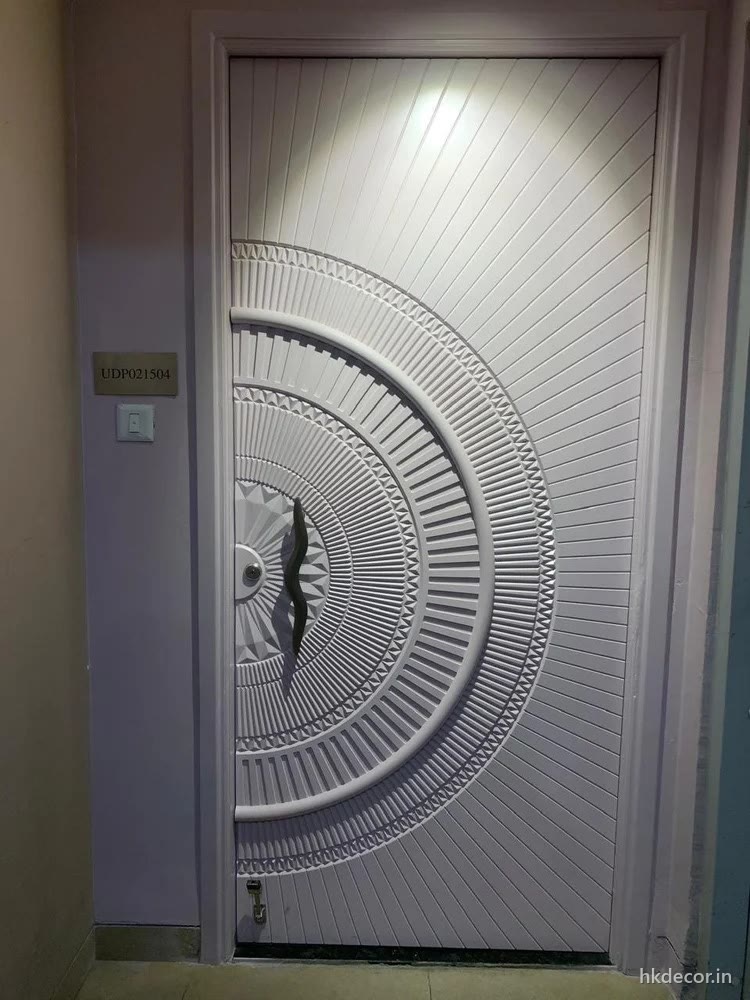
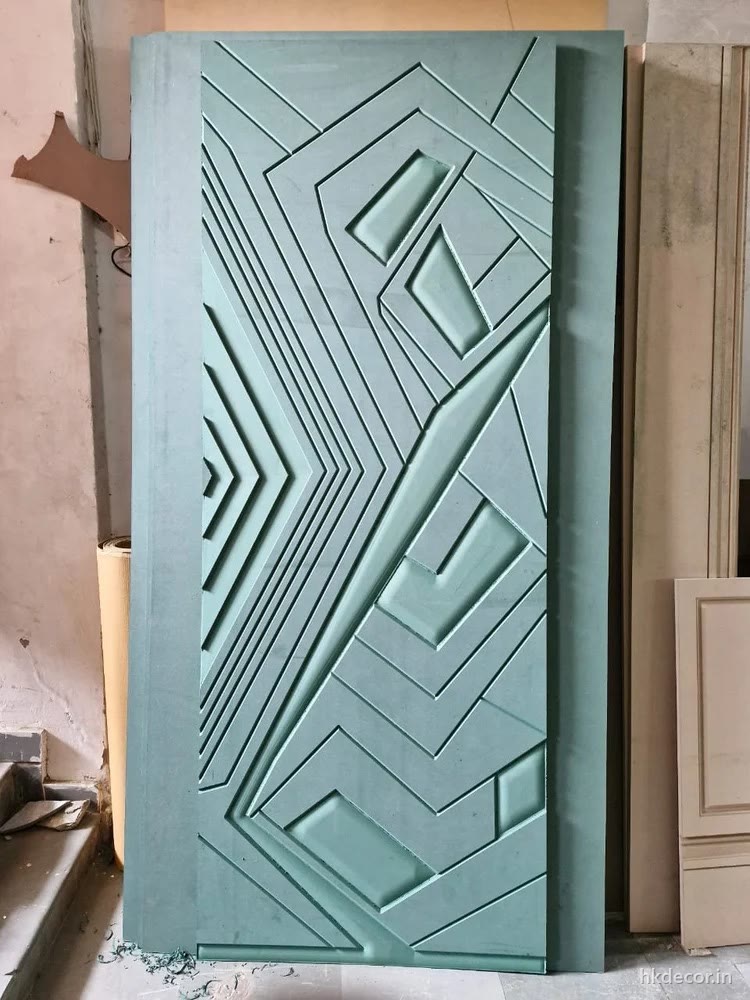
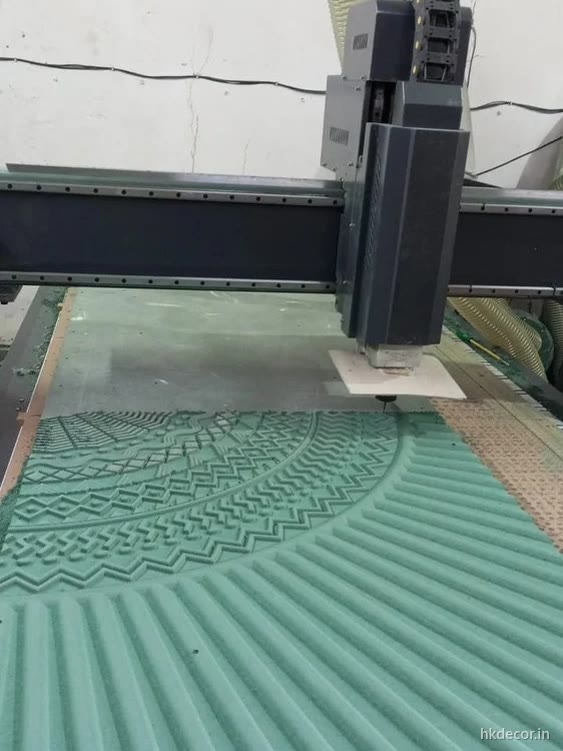
Carved doors off our own beds
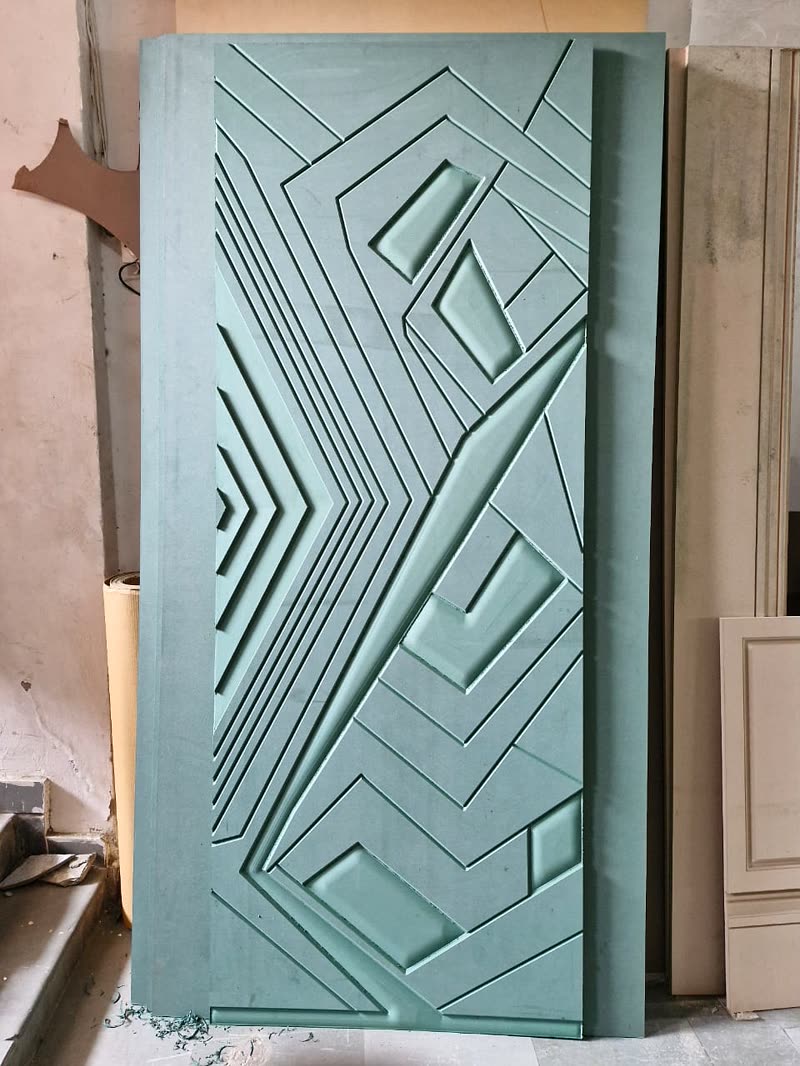
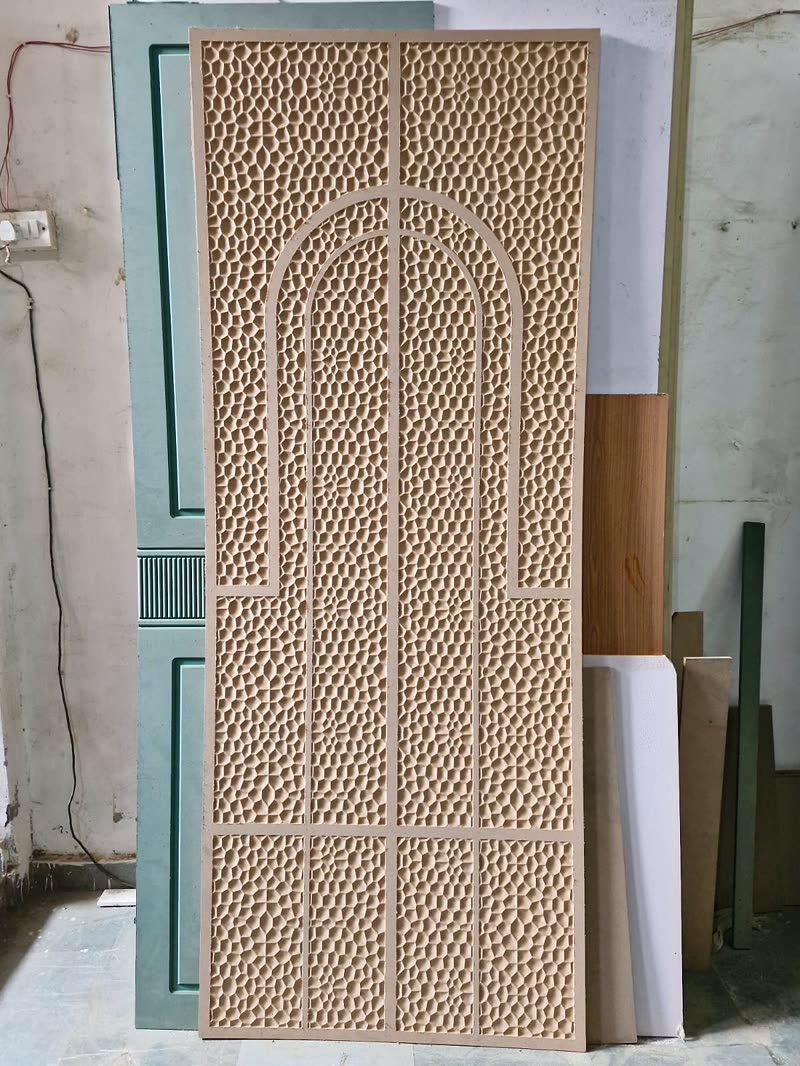
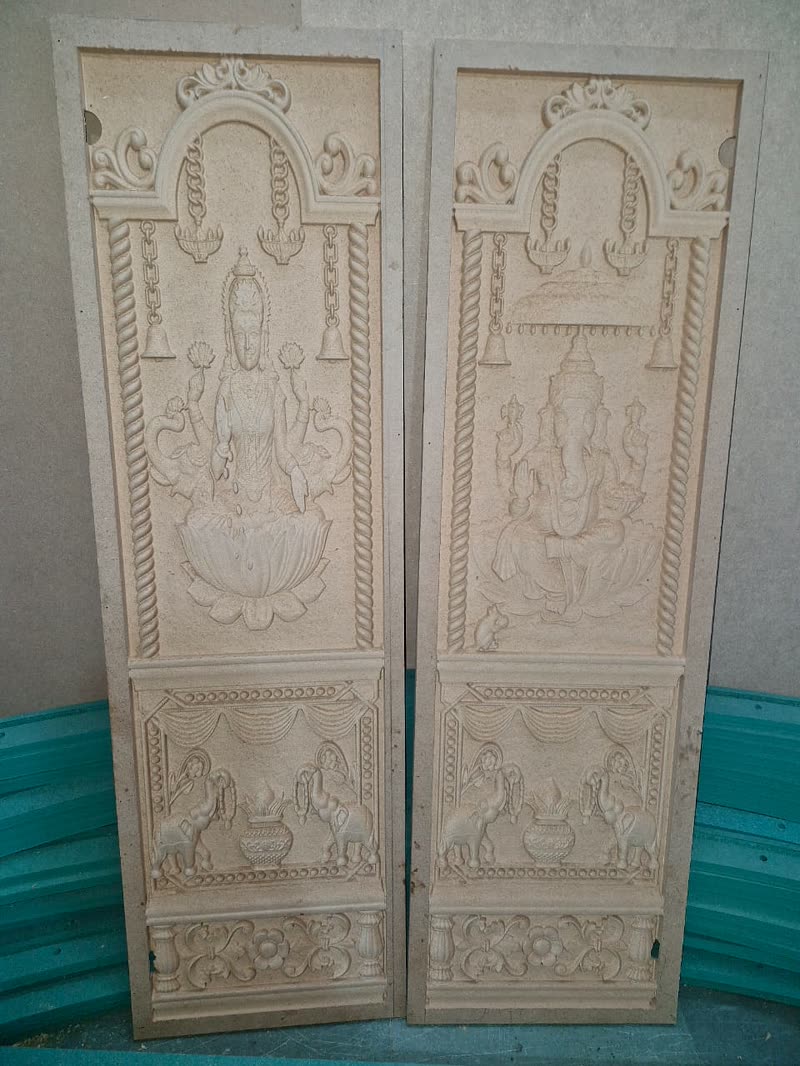
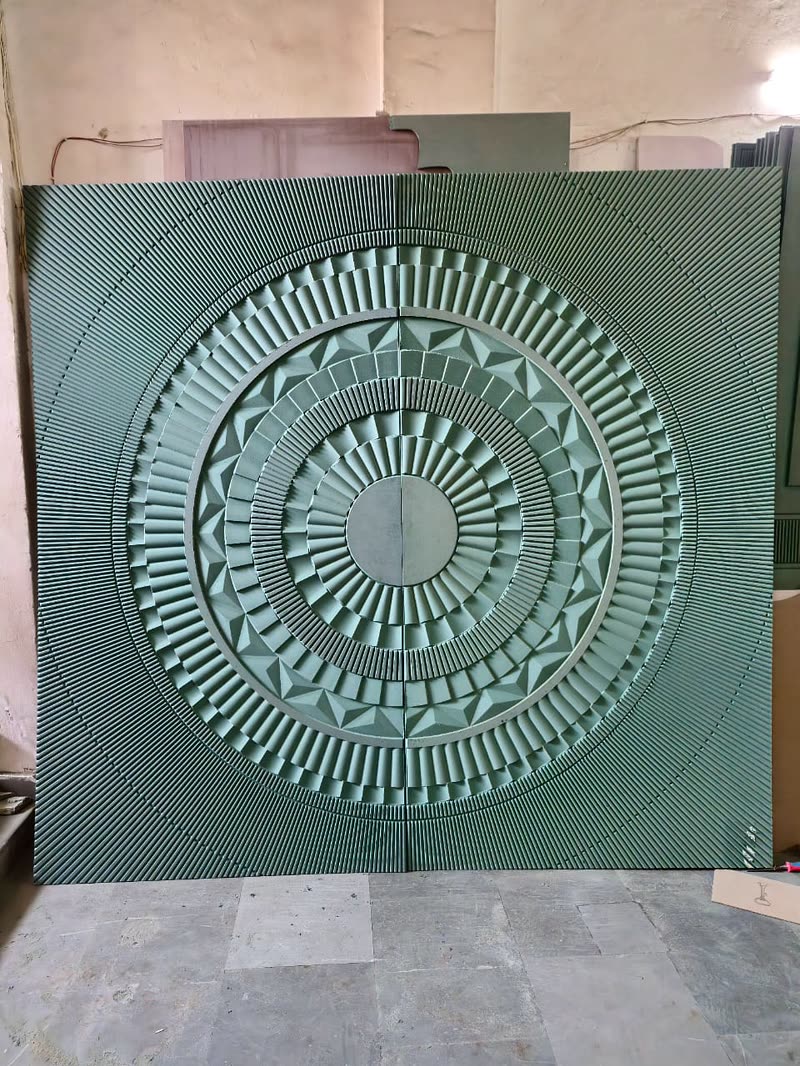
Photographed in Bijwasan after carving and priming, before final finish. Tap any door to see it larger.
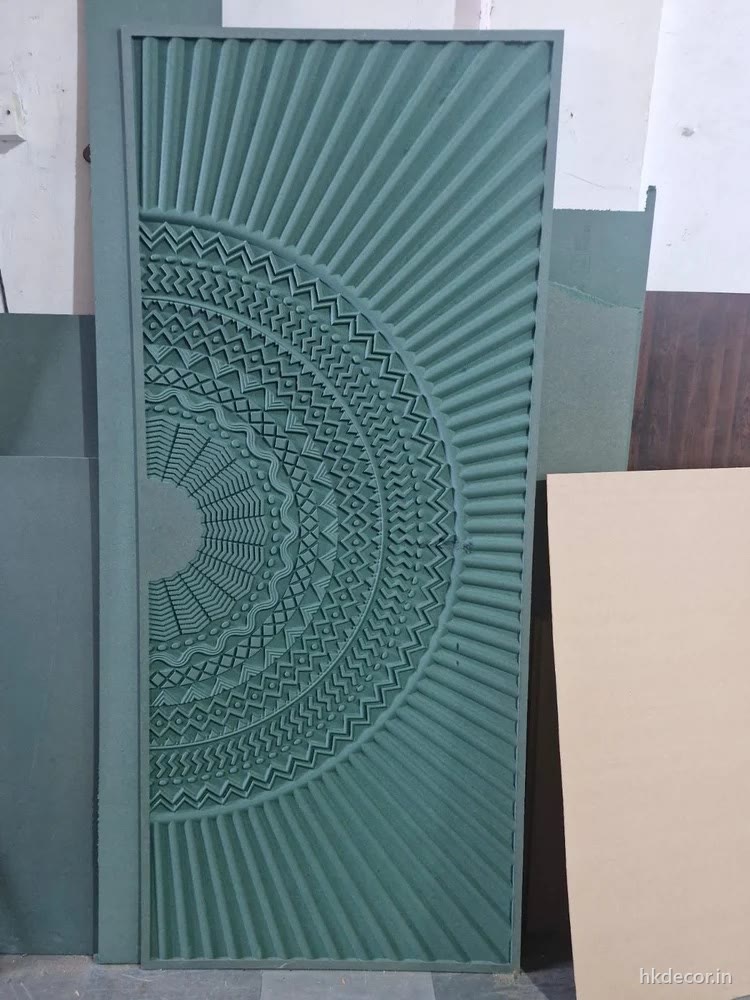
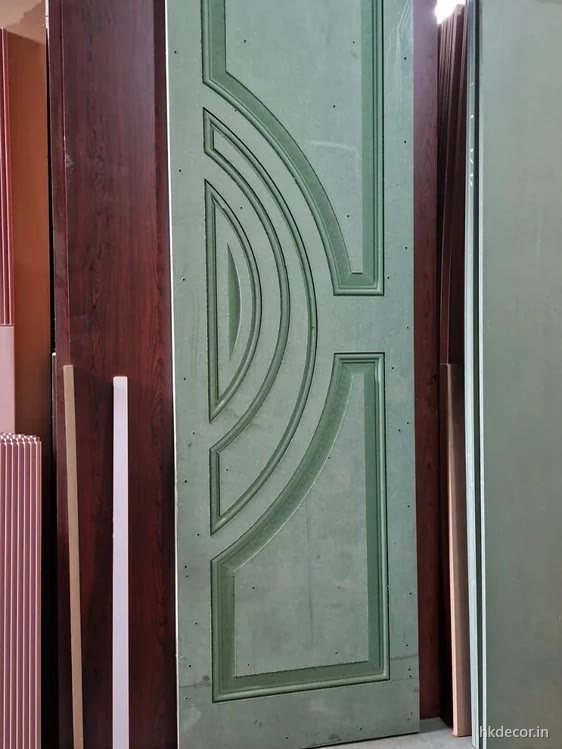
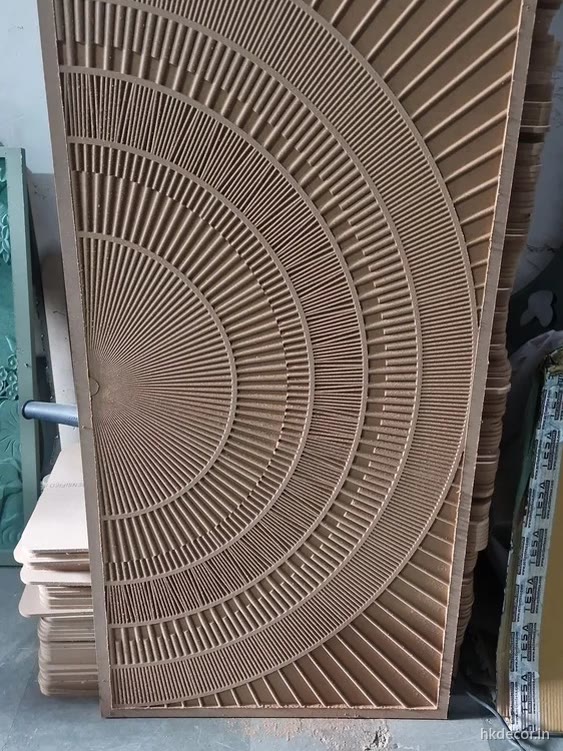
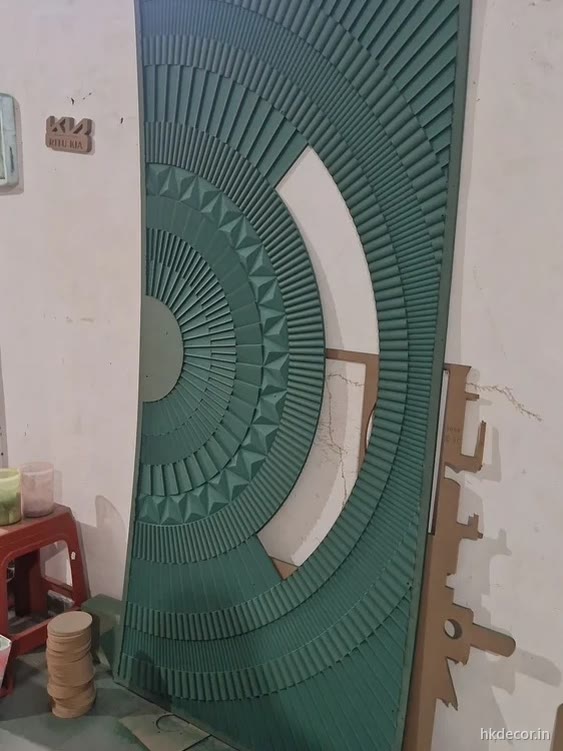
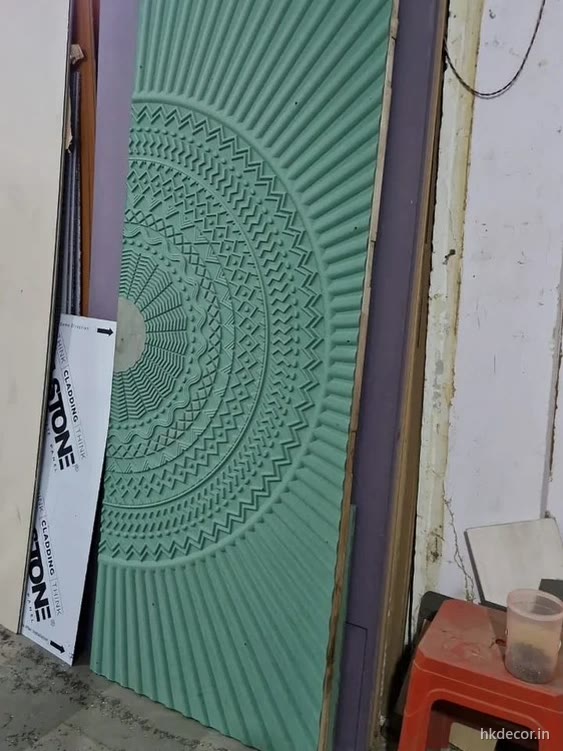
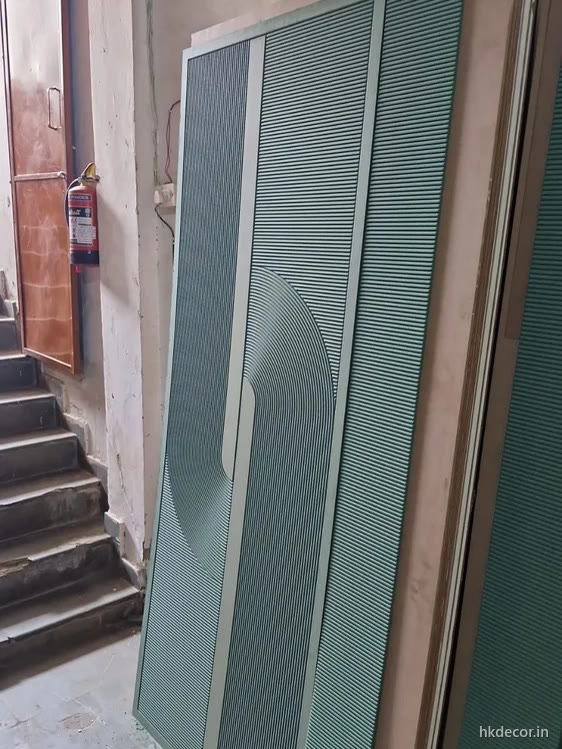
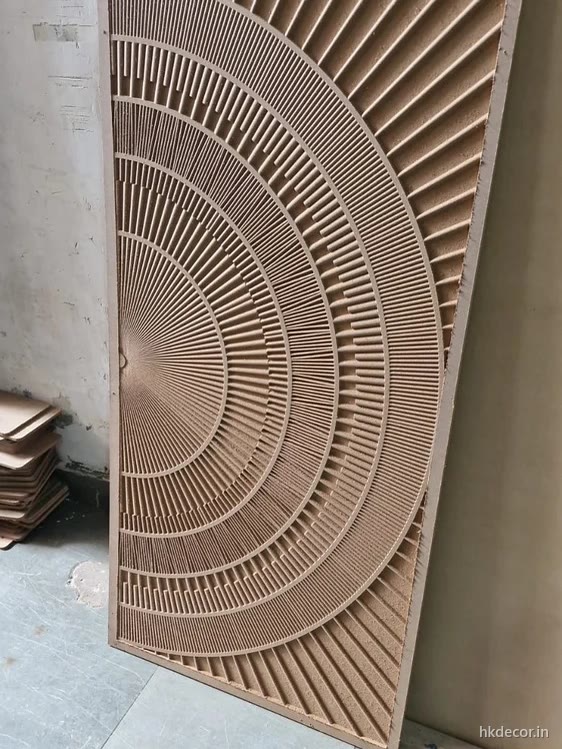
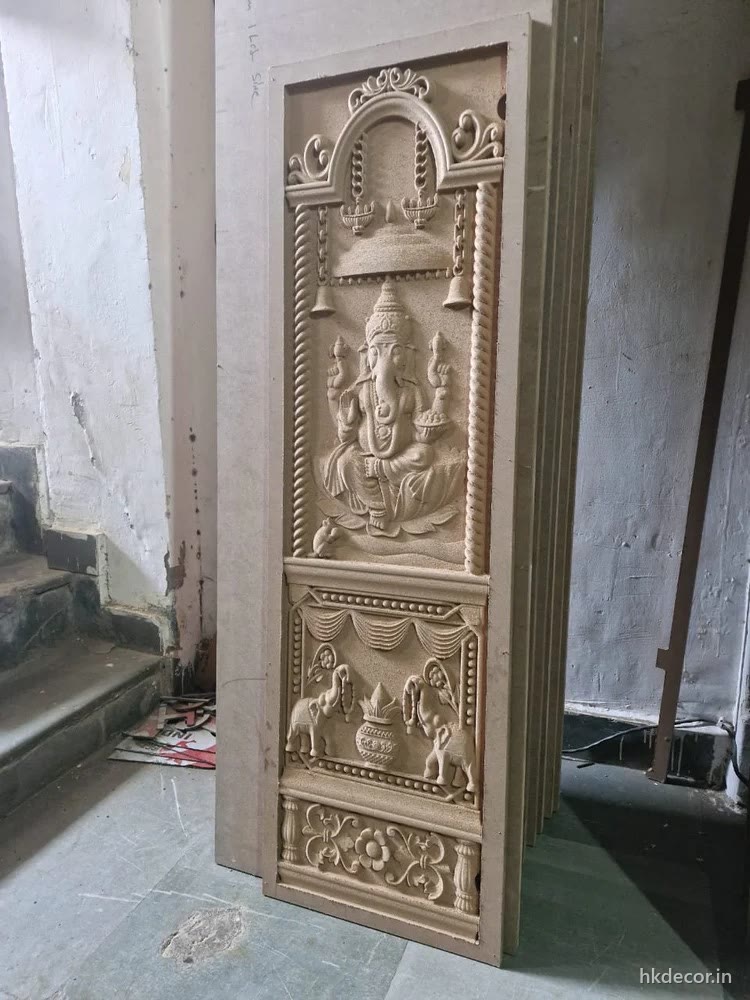
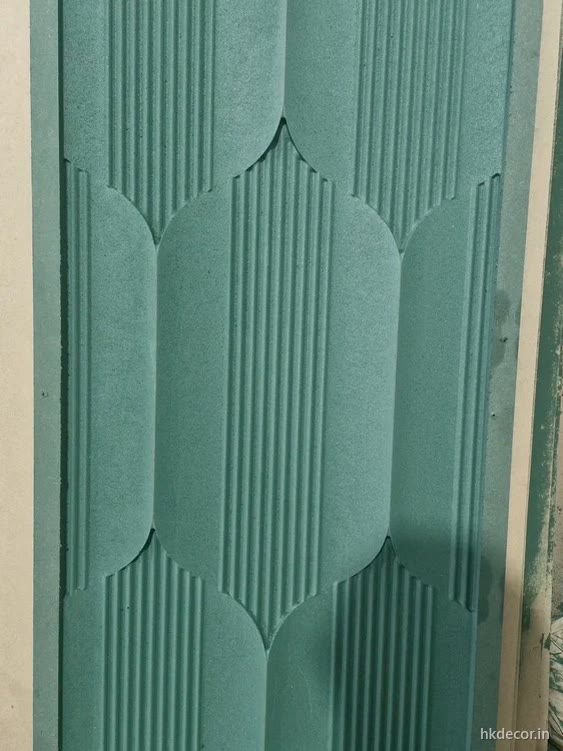
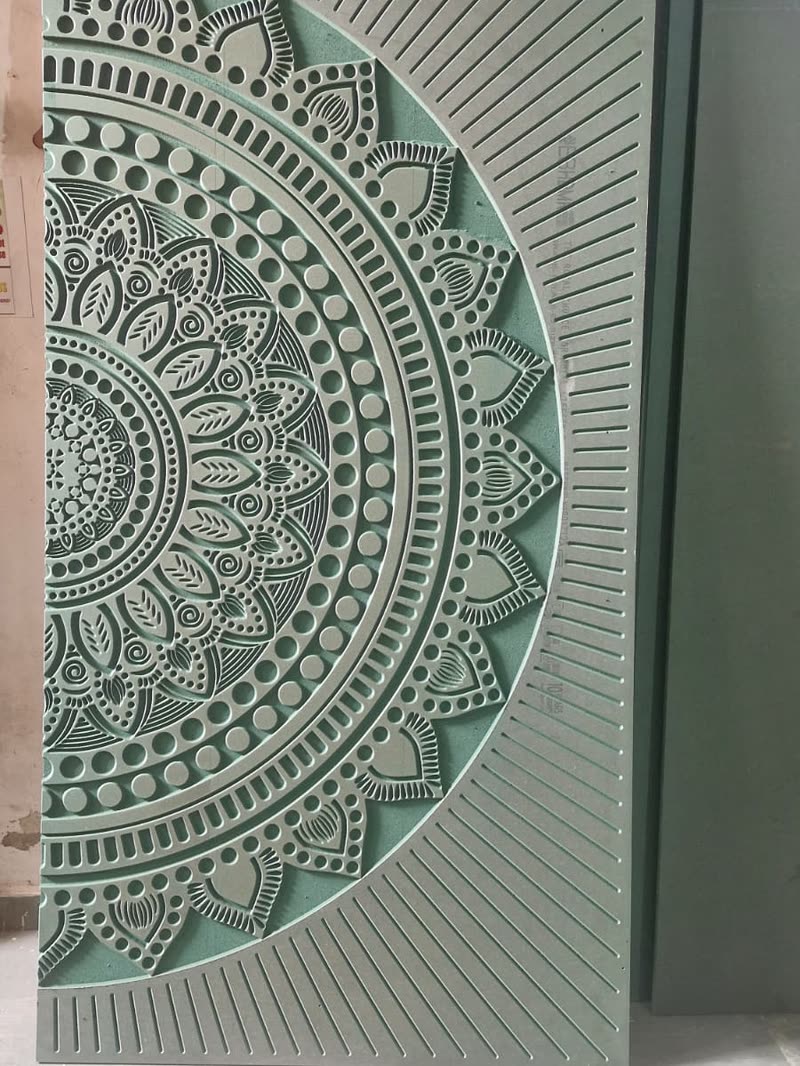
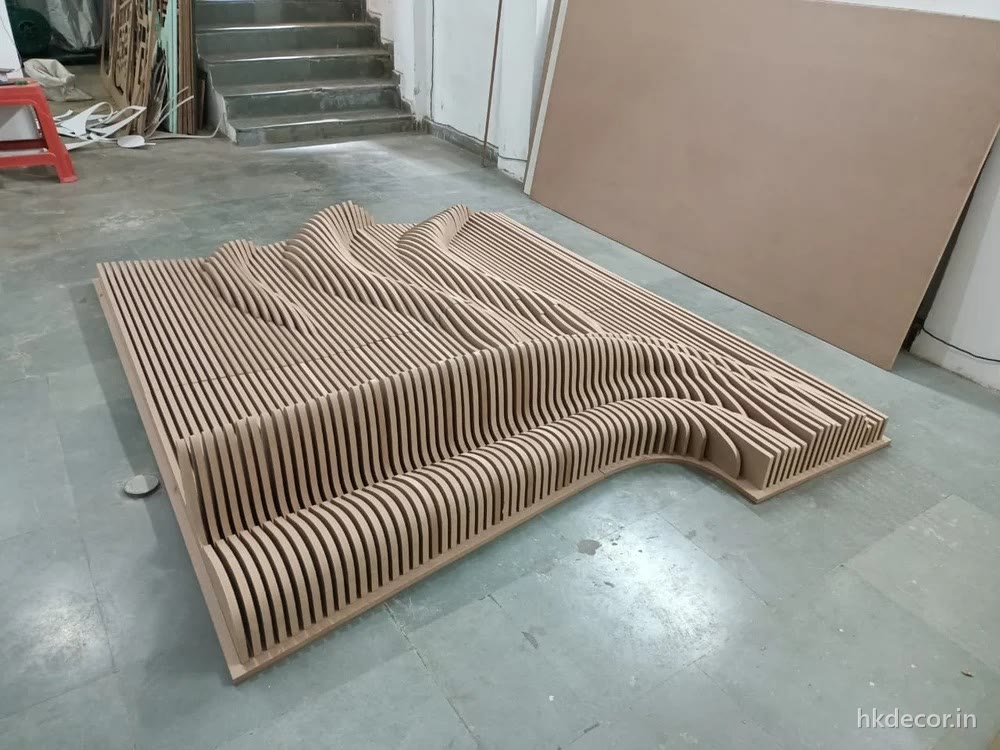
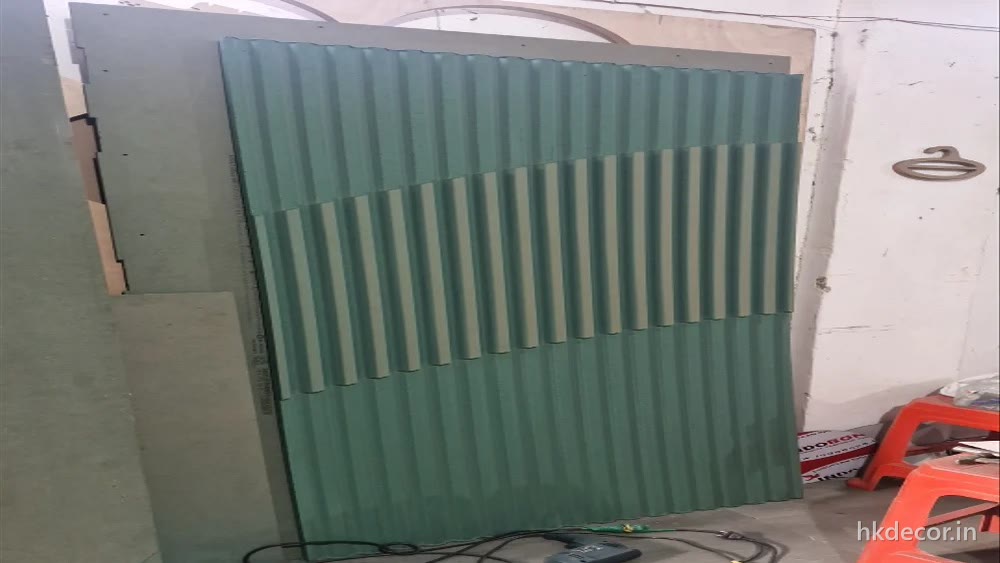
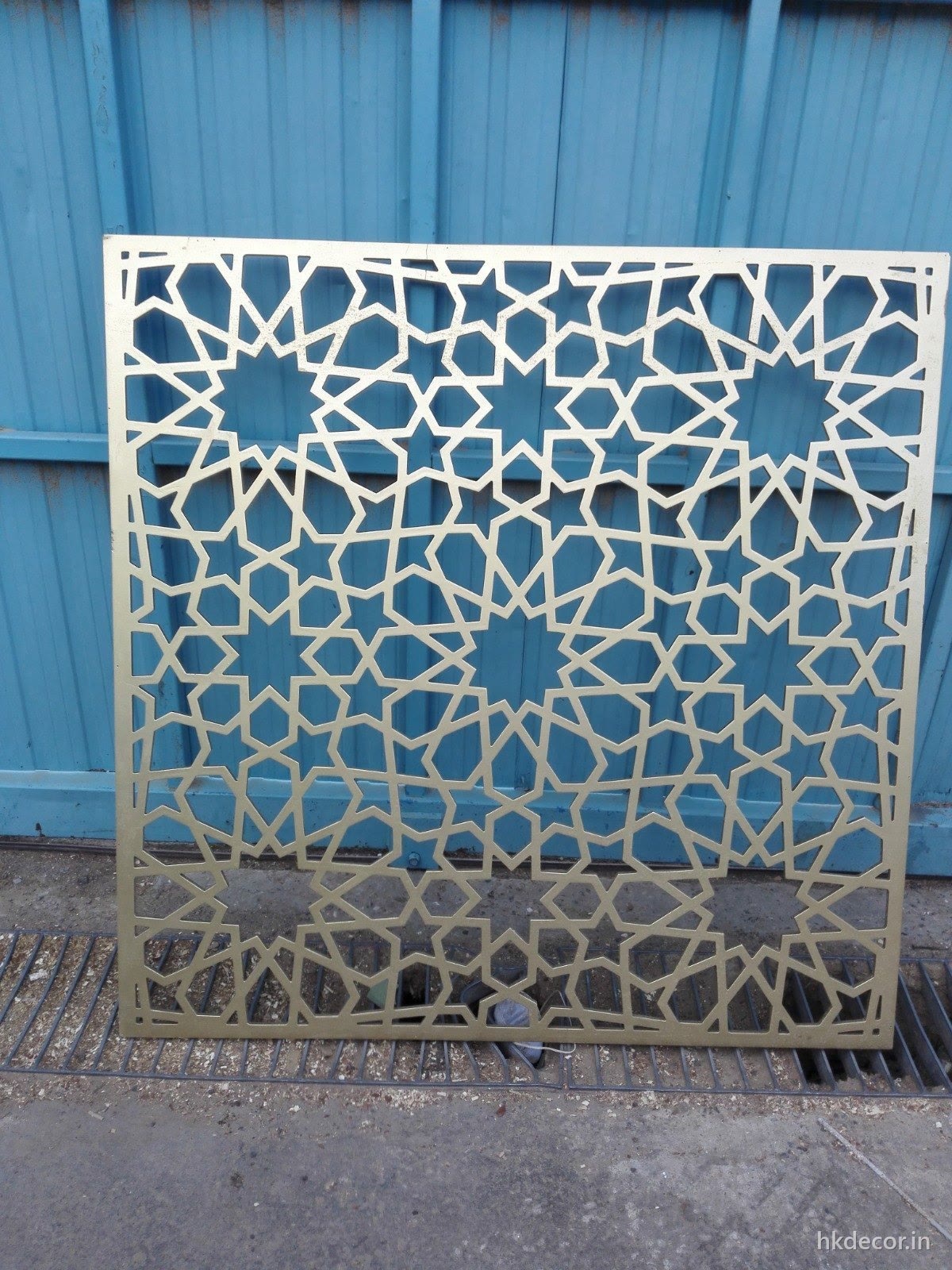
Carved doors often sit in a wall of the same family — see parametric wall panels and CNC jaali partitions.
What this is
Why a 3D CNC door manufacturer treats a door as a machining job
A door is the one panel in a house that gets touched every day, slammed occasionally, and looked at from 300mm away. That changes what a 3D CNC door manufacturer has to get right compared with a wall panel: the carving is the easy part, and the board, the depth and the finish are where doors fail.
We cut door faces on the same routers as everything else, held to ±0.3mm, from a file you approve before the machine starts. The carving runs edge to edge on the shutter face — no applied mouldings, no stuck-on trim — so there is nothing to lift, and nothing that reads as an add-on when the light rakes across it. Depth of relief typically sits between 8mm and 18mm; deeper than that and the door starts to lose the section it needs around the lock body and the hinge leaves.
Two build routes cover almost every enquiry. A carved door skin is a 6mm to 12mm face that gets bonded onto an existing flush shutter or a frame-and-panel core — the usual route when a builder has already supplied doors, or when weight matters. A solid carved shutter is cut from 25mm or 30mm board and finished as the door itself. The skin is cheaper and lighter; the solid shutter takes deeper relief and a heavier hand on the handle.
Main doors, pooja doors and internal doors
Main doors are usually the deepest carving and the largest single panel, and they are the ones most likely to face a semi-open lobby, so board choice gets a second look. Pooja doors are almost always figurative — Lakshmi, Ganesha, temple arches — and almost always a pair, which is the case where cutting matters most: we cut both shutters from the same file in the same setup so the carving lines up across the meeting stile. Internal doors tend to be geometric or parametric, shallower, and specified in sets, where the value is that panel twelve is identical to panel one.
Hardware, and where it goes wrong
Every lock body, hinge, latch and eyehole is cut on the machine, not drilled on site, and it is cut from the hardware drawing rather than a guess. This is the single most common thing that ruins a carved door: a site-drilled lock mortice that lands in the middle of a carved motif, breaks through a thin section behind the relief, and cannot be moved. Send the hardware model with the design and the cut-outs are placed where the carving allows them, or the carving is nudged so the hardware fits.
Finishing happens in the same building — PU, duco, lacquer and polish — so a pair matches, and so a set of twelve internal doors matches on the last one as well as the first.
Materials · comparison
Which board for a CNC carved door
Doors are the job where getting this wrong is most expensive, because a swollen or sagging shutter cannot be repaired — only replaced.
MDF
HDHMR
WPC
Plywood is left out deliberately: the grain tears on fine relief and the ply lines read through the flank of every cut. The full four-board picture is in the HDHMR vs MDF board guide.
Still unsure?
Door datasheet · rev 08.2026
Carved door specifications
- Beds
- 3 × 3-axis routers, 8ft × 4ft
1 × 3-axis router, 10ft × 5ft - Tooling
- 3mm–12.7mm straight, ball-nose and V-bit
- Max shutter
- 3050mm × 1525mm in one piece — covers any standard door
- Solid shutter
- 25mm and 30mm MDF or HDHMR
- Carved skin
- 6mm, 8mm and 12mm, bonded to your core or ours
- Relief depth
- 8–18mm typical · 22mm maximum in 30mm board
- Tolerance
- ±0.3mm across the bed
- Matched pairs
- Both shutters cut in one setup from one file
- Hardware cut-outs
- Lock body, latch, hinges and eyehole machined, not site-drilled
- Edge treatment
- Lipping, edge band or PU-wrapped edge
- Finish
- PU, duco, lacquer and polishing pressing
- Files
- DXF, DWG, AI, PDF, CDR, or a reference photo with the door size
- Turnaround
- 7–10 working days · 3–4 days express
- Fitting
- Across Delhi NCR · edge-protected pan-India dispatch
FAQ
Carved door questions
Can you carve onto doors I have already bought?
Not onto a finished flush door — the face is usually a thin laminate over a hollow or particle core, and a router breaks straight through it. What we do instead is cut a carved skin in 6mm to 12mm board and bond it to the existing shutter. That keeps your frames and hardware and gets the carved face you wanted. Send us the door thickness and how much the frame rebate can absorb.
Will a matched pair of pooja doors actually line up?
Yes, because both shutters are cut from a single file in a single setup rather than as two separate jobs. The motif is drawn across the pair, then split at the meeting stile, so the arch, the border and the figure carry through. Cutting them at different times on different boards is how mismatched pairs happen, and we do not do that.
Where do the lock and hinge cut-outs get made?
On the machine, from your hardware drawing or model number. Site-drilling a lock mortice into a carved door is how a good door gets ruined — the mortice lands in the middle of a motif or breaks through a thin section behind the relief, and it cannot be moved afterwards. Tell us the hardware at drawing stage and we place the cut-outs, or move the carving so the hardware fits.
What finishes can a carved door take?
PU, duco, lacquer or polish, all done in the same building. PU and duco are the usual choice for a carved face because they flow into the relief and hold the sharp shoulder of every cut; polish suits a door where the grain is meant to show. We do not do membrane pressing or lamination — a heat-bonded foil thins over a deep pocket and cannot follow an undercut, so it was never right for the depth of carving we do.
How heavy is a 30mm carved MDF door?
Heavier than a hollow flush door by a large margin — plan the hinges accordingly. A standard 30mm solid carved shutter normally wants three or four heavy-duty hinges rather than two, and the frame has to be fixed properly into masonry. If the opening or the frame cannot take the weight, a carved skin over a lighter core is the way to get the same face at a fraction of the mass.
Can I send a photograph of a door I saw instead of a drawing?
Yes. Send the photo with your door size and we redraw the motif to your dimensions rather than stretching an image to fit — a stretched pattern is obvious on a door because the eye has the frame to compare it against. You approve the redrawn file, and on anything sizeable we cut a sample panel so depth and finish are agreed before the run.
Other services
We also cut
Contact
Send the drawing. We reply today.
Email us [email protected] · attach DXF, PDF or a photo- Workshop
- Bijwasan, New Delhi
- [email protected]
- Hours
- Mon–Sun, 9:00am – 7:30pm
- Serving
- Delhi · Gurugram · Noida · Faridabad · Ghaziabad · pan-India dispatch
Prefer a form? It reaches the same team.